Brazen Careerist: The New Rules for Success by Penelope Trunk (Warner Business Books, 2007, ISBN 97-0-446-57864-6)
This book was written by: Penelope Trunk, author of a long-running career advice column. Ms. Trunk writes that "the column, Brazen Careerist, which still runs today, had ironic timing: I was unemployed, single, strapped for cash, and, for the most part, lost"(p.xvii). Although Ms. Trunk's work as a professional volleyball player, personal assistant to Esther Williams, and CEO of several startup companies shows that important lessons can come from anyone, author Jennifer Wiener has accused Ms. Trunk of dismissing advice from people who are SO INCREDIBLY FAT!!!
What is in this book: Instructions for looking like a success, since “the issue here is not if you are productive as a worker. The issue is whether you are productive as an image manager, because if you are not managing your image at work, you are not managing your career”(p.164). Taking an active role in managing your image and your interpersonal relationships will pay off because “being likeable matters more than being competent”(p.90). In fact, “the next time you consider areas for self-improvement, choose interpersonal coaching over office skills and you’ll likely get more bang for your buck”(p.91). Ms. Trunk will be the first one to tell you how effective that strategy was for Elliot Spitzer’s whore.
The book also has a keen grasp on the motivations and drives of the modern worker. For example, “here are some grand thoughts I bet you wish you’d had: viral marketing, routers, E=mc2”(p.154). Hell, everyone wishies that they thought of routers, but I specifically lie awake at night wishing that I was responsible for the theory that led to some of the greatest atrocities ever visited upon humankind. Coming up with the idea that led to the development of the atomic bomb would have been pretty sweet, too.
What is not in this book: The previous generation's outdated thinking about needing to pay your dues to get ahead. “A lot of experience doesn’t mean that someone is clever, likeable, or talented”(p.149). In fact, “don’t be the hardest worker. You shouldn’t look lazy, but if you work the most hours, you typically look the most desperate.” (p.151) You won't need to focus on your experience, anyway. Because “resume writing is a creative exercise that combines the skills of direct mail with the skills of a storyteller”(p.21), feel free to get as creative as necessary with respect to your employment history.
Would you recommend this book to Willy Brandt? Oh HELL yes. Ms. Trunk could teach him a metric ton about dissolving boundaries. Ms. Trunk broke work/life barriers by taking strategies from her household to the office after her couples therapist "observed that the problems I have in talking to my husband are probably the same types of problems I have in talking to people at work. This made sense to me immediately because I always say that I love my husband but would never want to work with someone like him.”(p.95) Ms. Trunk later brought the workplace back home by attacking her (now ex-)husband's unwillingness to communicate with her from her blog's professional platform in a column that was later syndicated.
Would you recommend this book to Larry Storch? Pfft. What possible use could he have for something brazen? The man's work is already a collection of solid gold.
What was interesting about this book? Ms. Trunk notes that “each piece of paper you get should either go in the garbage or into a file. Don’t let it sit on your desk for more than three hours”(p.163). That quote was supposed to illustrate a point I wanted to make, but I accidentally threw my notes away after they sat on my desk for too long.
April 15, 2009
It's Important to Look Busy
April 1, 2009
This Kid Is The Bomb
The Explosive Child: A New Approach for Understanding and Parenting Easily Frustrated, Chronically Inflexible Children by Ross W. Greene, PhD (HarperCollins, 2001, ISBN: 0-06-093102-7)
This book was written by Ross W. Greene, PhD, who “specializes in the treatment and study of explosive children and adolescents at home and school and in inpatient units, residential facilities, and juvenile justice facilities,”(p.335) although he is not particularly well-known for research in the fields of either military ordnance or spontaneous combustion.
What is in this book: A discussion of what makes an explosive child, and how to deal with one. The explosive child throws a tantrum at the slightest provocation; this is illustrated by the hypothetical scenario at the beginning of the book where one such child “pushes her mother out of the way, seizes the container of frozen waffles, then slams the freezer door shut, pushes over a kitchen chair, grabs her plate of toasted waffles, and stalks to her room”(p.2).
Their sensitivity and over-the-top outbursts may sound funny, but “the parents of inflexible-explosive children do not describe meltdowns with good humor”(p.23). Unfortunately, these children have been given a raw deal genetically, a “brain-based failure to progress developmentally”(p.14). “Some children—no matter how hard they and their parents, teachers and coaches try—are just not ‘built’ to be great athletes, readers, or spellers”(p.10). Similarly, inflexible-explosive children are not “built” to handle challenging situations like frozen waffle shortages (p.1), chili being offered instead of macaroni and cheese (p.62), chicken pot pies being served incorrectly (p.143), being told to stop eating cookies (p.164), and jugglers in Harvard Square performing without a permit (p.76).
What is not in this book: The same old approaches to managing problem children, because inflexible-explosive children can't be stopped, reasoned with, or beaten senseless when they are in the grip of a frustration-induced meltdown—your Earth weapons traditional parenting methods are useless against them because “punishing a child during meltdown has the potential to fuel his frustration even further and, as you may have found, may not decrease the odds of a meltdown the next time he’s frustrated”(p.23). Parents of inflexible-explosive children either have to recognize potential meltdowns before they happen and intervene immediately, or brace themselves for the worst and ride it out. “I use the term mental debris to describe the horrible words that may come out of a child’s mouth during these incoherent moments”(p.23), and you'd better learn how to shrug it off, you “freaking bitch”(p.203), because the kids don't really mean it and won't be stopping it anytime soon. If you're the kind of person who thinks “I just can’t tolerate disrespect. My immediate reaction is to start screaming”(p.199), you’re kind of screwed.
Would you recommend this book to Jack Bauer? Sure, but he’s pretty good at dealing with explosive situations already.
Would you recommend this book to a Mexican? Yes. Specifically, I would recommend this book to the staff of Mexico’s Grande Casa de Peligro Resort, to prepare them for families like that one with the foul-mouthed little brat that was always in the dining room while I was there. On the other hand, the resort’s guests should read The Explosive Diarrhea, to prepare them for... well, it was Mexico.
What was interesting about this book? Dr. Greene presents real-life dramas and case studies that as are fascinating as one would expect, but more interesting than that is the variety of names that he has assigned to the characters involved. “Most of the names are, in fact, those of friends, nonspecific cartoon characters and rock musicians, and my wife’s ex-boyfriends”(p.x), which is why readers will learn about Hubert, Marvin, Jermaine, Eduardo, and Ken (it is not clear if Dr. Greene married Barbie).
March 14, 2009
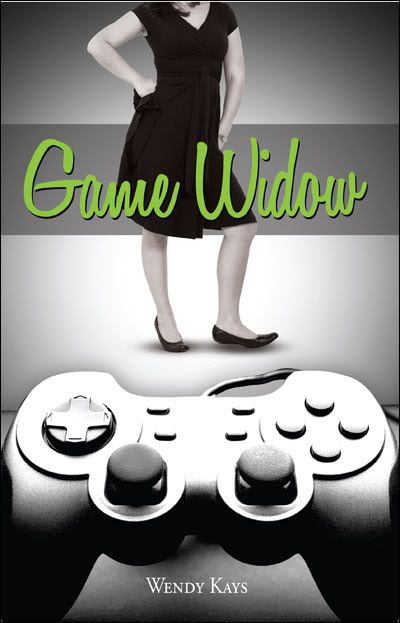
Game Widow
Game Widow by Wendy Kays (Synergy Books, 2008, ISBN 978-1-934454-26-8)
Bonus material available.
This book was written by: Wendy Kays, who “has been married to the lead designer of the SOCOM: U.S. Navy Seals video game series for six years.” Ms. Kays is also a former game widow, but she and her husband have revitalized their once-endangered marriage into a union so strong that his accomplishments are listed first under her biography.
What is in this book: An analysis of the reasons why video games entice so many people to abandon their families, along with a look at the industry that creates them and ways to take back some of the control that they exert over our lives. This is a serious subject because “sending an adult online should have similar expectations that sending an adult to Las Vegas would,” which means that there is a real possibility that some people “will get into trouble of the mild kind, usually, and on occasion, the serious, life-altering or life-ending kind”(p.108).
In the real world, “there’s no road map with big goals broken into smaller goals that have guaranteed rewards for success”(p.8), while the virtual world can be quite rewarding, as Ms. Kays illustrates with Navarre--a fictional online persona created to demonstrate her point. “The Rare Hummingbird of Flashiness that hovers around Navarre is not only pretty and attention-grabbing, it’s [sic] presence also advertises that Navarre is one of only a few players ever to defeat the Elusive Swamp Witch, who only appears in the game once a year”(p.8). Even games designed to mimic reality are streamlined and more pleasant. “You may have to pick up dog poop in the real world, but you don’t have to clean up after your virtual pet. Or if you do, you’re insulated from experiencing the unpleasantness of bending over, fooling with the bag, inhaling the smell, and feeling the warm lump”(p.11).
What is not in this book: A chicken-livered lack of resolve. When their marriage was in trouble, Ms. Kays and her husband “felt a professional was too scary and formal, so we did what we could on our own”(p.79), which meant doing things the hard way. Ms. Kays writes that “I forced myself to listen,” but more importantly she let him talk and “continued to listen (which was extremely difficult, because I wanted to talk about me so badly)”(p.79). Despite the difficulties, Ms. Kays refused to give up. “I even had to swallow my pride and let him take the lead sometimes so he could know this was a joint effort he was part of and not just me acting like a dictator making all the new rules”(p.81).
But she had to go beyond swallowing her pride. “I made a personal rule that I couldn’t talk about him as the problem, just the problem itself. I pretended our problems had magically appeared out of thin air – with no one to blame”(p.80). It got worse for her, because “If he said I was the problem, I had to suck it up and apologize, even if I didn’t feel like I was the problem”(p.80), but it was necessary because anything else would make him think “a ‘fixing things’ talk was really a ‘wife getting time to yell at him’ trick”(p.80).
Game Widow recounts a moving story of intense personal struggle, and Ms. Kays herself writes that “humble pie was expensive emotionally, but I was willing to give up my righteous anger to get my happy life with my husband back”(p.81). It ultimately paid off because not only is their marriage restored, but “in the time my husband used to play video games at night, he is earning an MBA from a prestigious university”(p.115).
Would you recommend this book to widows of U.S. servicemen who were killed in Iraq or Afghanistan? Without reservation. Ms. Kays’ description of a game widow as “a woman whose husband might as well be dead to her because he is constantly engaged with video games”(p.xii) is as respectful to their situation as it is similar. The fact that Ms. Kays’ not-dead husband has earned a living by sensationalizing the ongoing sacrifices made by the United States Armed Forces and marketing it as entertainment can only add another layer of empathy and understanding.
Would you recommend this book to literary agents like Jeanne Fredericks or Robert E. Shepard? Yes, but not just so they can cry bitter tears into their pillows over not signing this author while they had a chance.
It turns out that “the video game industry is not like the book industry in which near-finished manuscripts submitted by eager authors can be reviewed and the best one chosen”(p.41). That means that these agents may find that their unconventional willingness to consider book proposals without reviewing near-finished manuscripts is an attitude better suited for a different field. Someone should also tell Hart Publishing that they can cut their instructions on submitting manuscripts that are not yet written and just wait for the near-finished ones to come rolling in.
Changing trades from publishing books to publishing video games would require some serious adjustments, though. With electronic entertainment, “even if the idea comes from someone who has already designed a best-selling video game, there is no guarantee on how the final product will turn out,”(p.41) which is completely unlike the publishing industry, where bestselling authors can always be relied upon to deliver stellar work.
What was interesting about this book? Ms. Kays’ startlingly plausible extrapolation of future trends based on current evidence. Gaming will cause problems in the workplace because “employers are already considering passing more of the cost of health care on to employees who are overweight or who are smokers. When and if playing video games is shown to make health conditions worse, or even cause them, gamers will be targeted as well”(p.61). In fact, “It’s only a matter of time before organized research into the health effects of video gaming is done and before the debate over who covers the costs of the health consequences of gaming begins,” and in the future “it may become as acceptable to discriminate against gamers as it is to discriminate against smokers and people who are overweight”(p.61).
However, there is still hope. After all, “if society can embrace recycling and alternate energy to impact the environment, sacrifice buying frills to save money for retirement, and avoid buying products from companies known to employ inhumane sweatshops, we can certainly sacrifice some time to carefully choose and manage our entertainment,” which will be how we can “turn the vast tide of a selfish and entitled society and an entrenched game industry”(p.116).
March 1, 2009
You're Not Speaking My Language
Genderspeak: Men, Women, and the Gentle Art of Verbal Self-Defense by Suzette Haden Elgin PhD (John Wiley & Sons, 1993, ISBN: 0-471-58016-3)
This book was written by: Suzette Haden Elgin, PhD, an expert in applied psycholinguistics and the founder of the Ozark Center for Language Studies. Dr. Elgin has also written several science fiction books, including the Native Tongue series--in which she developed a new language, Láadan, similar to Klingon but less popular.
What is in this book: A way of looking at the way men and women use language differently. These differences are subtle and vary from person to person, but “men are usually bigger and stronger, which means they can often drown other people out; women are more likely to start crying, a different kind of power play that nevertheless brings conversation to a halt”(p.166). Dr. Elgin wants to help people move from masculine or feminine extremes to realize that “Male/female communication does not have to be either armed combat or endless mystifying tedium”(p.xvi).
Dr. Elgin explores nuances and pitfalls of intergender communication with clear explanations, like her declaration that “a man asked to talk openly and easily and in detail about his feelings is like a woman asked to talk openly and easily and in detail about her urination”(p.258). Both are perverted deviants, but there aren’t nearly as many websites where you can pay to hear men talk about their feelings.
What is not in this book: Pacifism. Verbal self-defense may be gentle, but Dr. Elgin is realistic about the violence of the realm in which it must be practiced, noting that “differences in semantics can be as dangerous as missiles, and are often as well hidden”(p.40). This self-defense is an important art to master because “hostile language can kill you as surely as hostile driving can”(p.165). Not only does hostile language pose a health risk, but if you don’t get out there and make friends, you’re in mortal danger. That’s because “research has proved that people who are disliked and lonely have far more health problems than people with a strong social network”(p.167).
Would you recommend this book to Don Roberts? Yes, because “using the Gentle Art techniques will bring you extra benefits—fringe benefits—that are valuable to you on the basis of pure self-interest alone”(p.97), which may inspire him to write "Fringies 2: The Fringe-ening."
Would you recommend this book to Richard Gere? No, he’s done pretty well for himself through his mastery of gerbil self-defense.
What was interesting about this book? Dr. Elgin’s discussion of sexual harassment. “One man will say ‘That’s a pretty dress’ so suggestively that every word in the sentence might as well be one of the classic ‘four-letter’ ones; another can say ‘Nice tits’ as inoffensively as if he had said ‘Yankee Doodle.’”(p.211)
I want Dr. Elgin to teach me how to whistle “Yankee Doodle.”
Special Award
Bitterly Books would like to give the I Just Pantsed Arthur Miller While He Was Giving Eugene O’Neill A Wedgie Award for Excellence in Dramatic Accomplishment to Dr. Elgin for the realistic scenarios, written out in narrative form, that open each chapter of her book. She may have intended Genderspeak to be a nonfiction work that explores intergender differences through the scientifically rigorous discipline of linguistics, but these dramatic, realistic scenarios play out in such a gripping fashion that they almost eclipse the book's analysis of social interactions. Readers follow the trials and tribulations of Mary, who struggles to be understood by her parents, her coworkers, and her boss. Mary also has problems with her husband Frank because it “seems to Frank that even when, as in this case, Mary can see that he’s busy, she doesn’t hesitate to interrupt him and demand that he involve himself in what he sees as her soap opera. He resents this, and does everything he can to discourage it”(p.230). The mindset of John, her boss, isn’t very helpful, either:
“As John perceives the situation, he has no choice but to put up with women in the workplace–the laws require him to do that—but he’s under no obligation to make it easy for them. [....] The sooner he can maneuver her into giving up the idea of a business career, the sooner she’ll be out of all this stress and tension.
He is of course careful at all times to maintain the surface position of a nonsexist male. That’s part of doing business in America today, and he recognizes and responds to that fact in spite of his own more conservative views on the subject. He enjoys the strategic challenge this offers him, and prides himself on his skill in dealing with it.”(p.3)
Dr. Elgin, please enjoy your I Just Pantsed Arthur Miller While He Was Giving Eugene O’Neill A Wedgie Award for Excellence in Dramatic Accomplishment, because you (and your complex, nuanced characters) have worked hard for it.
February 15, 2009
Creative Charts
Charting Your Career: The Horoscope Reveals Your Life Purpose by Stephanie Jean Clement, PhD (Llewellyn Publications, 1999, ISBN 1-56718-144-9)
This book was written by: Stephanie Jean Clement, PhD, author of several astrology books and the PSYCHIC POWERS REPORT for Oprah Winfrey. Dr. Clement’s "PhD in transpersonal psychology has prepared her to work with clients in defining their creative potential and refining their creative process”(interior page).
What is in this book: Techniques that “will help you to understand your personal vocation and also facilitate your work with others”(p.238). What is new about these techniques is that they have finally loosened the rigid, uncompromising formulas of astrology and offered a chance to be creative. Not many people realize that “astrology provides several potent methods for investigating creativity”(p.3), which can be more important that actually learning new things. “Human beings as a group already know enough—we have enough facts”(p.2). With the techniques in this book we can rearrange what we know. Creatively.
What is not in this book: Layman’s terms. This book is designed for readers who are familiar with basic astrological terms, so you’d better keep a straight face when you read about how "transits" from "Uranus will coincide with the entrance of individuals into one’s life who have profound emotional impact,” because the statement that “Uranus could signal a meeting which has continuing effects over many years”(p.162) is not talking about low-rise jeans or bathhouses. You’ll also have to know that “a planet has accidental dignity when it falls in an angular house”(p.7). Accidental dignity is not what happens when your WHO FARTED? baseball cap suddenly looks respectable because you’re standing next to someone in a CO-ED NAKED FIREFIGHTING tee shirt.
Would you recommend this book to Douglas Corrigan? Please. He had a chart and knew exactly where he was going when he gave the finger to U.S. aviation authorities on his gloriously crazy flight across the Atlantic.
Would you recommend this book to fans of Final Fantasy VII? I don’t know. When she writes that “this beginning point is paralleled by the alchemist’s prima materia—the cell is the physical beginning, the prima materia is the psychological beginning”(p.54), I can’t tell if she’s saying that alchemists should play more Final Fantasy, or saying that hardcore nerds should spend more time studying alchemy.
What was interesting about this book? The wide range of careers that are discussed as potential life purposes. If Uranus is in your fifth house, “you are often able to see into the behavior of others and may work well with psychologists and psychiatrists, researchers of all kinds, sports figures, and even travel agents,” while Pluto in your fifth house means that “water treatment, weather forecasting, and animal control workers may attract your eye in some way, as well as psychics, alchemists, and social welfare advocates”(p.32), to name a few.
February 1, 2009
Delayed Contact (No Touching)
The Challenge of Contact: A mainstream journalist’s report on interplanetary diplomacy—revised post-9/11 edition, by Phillip H. Krapf (Origin Press, 2003, ISBN: 1-57983-009-9)
This book was written by: Phillip H. Krapf, a journalist with 25 years of experience including work for the L.A. Times. Mr. Krapf is also “an abductee with a story to tell”(p.190), and “was actually recruited to write and speak on behalf of this alien species, to act as their designated reporter and spokesman regarding their efforts to establish diplomatic relations with the human race”(p.xi)
What is in this book: Updated information. Mr. Krapf was contacted by a group of aliens called the Verdants and wrote about it in two books, The Contact Has Begun and The Challenge of Contact, issuing a press release on August 23, 2001, declaring that the Verdants would “proceed with efforts to attempt to establish Verdant-Human diplomatic relations”(p.156). SPOILER ALERT: They didn’t.
Although Mr. Krapf was able “to schedule a keynote talk at a major UFO conference” to give further details of the Verdants and their plan, “and this speech was to be delivered on September 16[, 2001]”(p.ix), Mr. Krapf was notified by the Verdants on September 11, 2001, that “They had been observing what they called ‘the regrettable scenes of carnage occurring on your planet’ and had come to the inescapable conclusion that ‘the human species is not yet ready’”(p.139). This was a profound disappointment for Mr. Krapf not only because humanity had missed out on an incredible opportunity, but also because “I was going to be vindicated, and all of my carping critics would have to eat crow after dumping on me for several years”(p.145).
This second edition of Mr. Krapf’s book reviews his past history with the Verdants and discusses his “latest contact with these extraterrestrials, and provides an update as of June 2002 regarding their roller-coaster attempts to link up with humankind”(p.xi).
What is not in this book: Sizzling hot alien porn. During his extraterrestrial encounters, Mr. Krapf encounters an alien who is exceedingly interested in matters of Earthly sexuality. Although Mr. Kraft demurely tried to change the subject, “she had persisted, and eventually exposed her naked body to me and suggested a sexual encounter, which I immediately spurned”(p.30).
However, the book does contain an alien probing, along with a discussion of “the effect of the probe as it penetrated and then transcended the memory banks of my current existence”(p.112).
Would you recommend this book to Marty McFly? Yes. He would contact the Verdants if I challenged him to do it and then called him a chicken.
Would you recommend this book to a terrorist? Absolutely. Maybe when they realize how much they’ve really cost us—all of us, not just the Americans—they’d think twice before embarking on a course of senseless violence.
What was interesting about this book? Although Mr. Krapf has voyaged beyond Earth’s atmosphere and come to terms with the alien Verdants and their culture, he still retains his strong sense of justice and his rapier-sharp wit. As an example, he recounts his reaction to “a joke with racial overtones,” on p.184-185:
He grinned at me after finishing his story, and I simply stared stone-faced at him in astonishment.
“My God,” I said, “Do they still tell that story in Bakersfield?”