May 31, 2009

Crystal Healing (Not sexual healing, not Crystal Bernard)

Healing with Crystals by Pamela Chase and Jonathan Pawlik (Career Press, 2001, ISBN 1-56414-535-2)

This book was written by: Jonathan Pawlik, Pamela Chase, and the (uncredited) Crystal Devas. "Devas are the 'higher selves' for the kingdoms of Nature,"(p.12), and Jonathan channels them and includes their messages in the book. Although they only communicate twice in the first 140 pages, they get exceptionally chatty in Chapter 12, "Planetary Healing."

What is in this book: Instructions for owning and operating crystals, which are actually a lot like housepets. Pets that occasionally ask to be buried in dirt. "Crystals like to be stored in sunlight and open spaces. They like to be used and enjoyed"(p.34). You can ask your crystal questions about where it would be most comfortable: "Would you like to be on the window sill? By the bed? Etc."(p.51) and question it about its uses: "Shall I place you in my receiving hand, on my heart, on my third eye?"(p.51). Prolonged use will pollute and/or deplete your crystal's psychic energies, so you will periodically need to clean and recharge it. Luckily, your crystal will tell you whether it wants to be immersed in salt, rain, smoke, running water, your breath, or the earth (p.49). Sadly, as with pets, your relationship will eventually come to an end. That's when it's time to "ask the spiritual consciousness of the crystal whether its work with you has been completed [.... and] ask it what element (earth or water primarily) will be most beneficial for its internal balance, and take the crystal where it needs to go"(p.37). Fortunately, these partings are usually less messy and rarely involve a veterinary bill.
While you and your crystal are working together, you can apply the teachings from part two, "clearing out the blocked energy that impedes growth, infusing positive healing energies, and expanding spiritual awareness through contacting the higher self"(p.81).

What is not in this book: Ways to use crystals as weapons, which is an all-too-real possibility. Inhabitants of ancient Atlantis abused crystals in "battles for supremacy where specially constructed crystals were placed underground and activated with the sun in a special process"(p.28). This is accepted as fact because "there has been a lot of information channeled, or intuitively received, about the Atlantean civilization,"(p.27) and it has been further corroborated by the Goldblum/Lauper documentary, Vibes.
This book chooses to focus on more constructive crystal uses, such as healing energy imbalances and storing information. For example, a crystal under your pillow can help you remember your dreams. "Double-terminated crystals are nice for this purpose, and you maybe [sic] able to tape a small one to your third eye"(p.108).

Would you recommend this book to BeyoncĂ©, Lil' Kim, or Missy Elliott? I'd have to think about it. I don’t know if Cristal Divas would be willing to take advice from Crystal Devas, but they may have a lot in common. The devas say "I have the ability to instill confidence and courage in all who choose to work with me"(p.142, channeled), which could just as easily have been said by one of the divas. Then again, it can also be attributed to spirits inhabiting wood, modeling clay, latex, and earwax.

Would you recommend this book to Billy Mays: No. Chase and Pawlik have designed the perfect vehicle for crystal sale tie-ins, but they lack the killer instinct of a true closer. "We could mention here that we were able to travel to Arkansas and buy clear quartz crystals at a time when they were much less expensive,"(p.129) but they don't.

What was interesting about this book? The illustrations.

Figure 10-1: This costs extra in Thailand

Figure 10-4: What not to do with the passed-out girl at the frat party

Digg this Stumble Upon Toolbar

May 14, 2009

Age of Seduction

When Godly People Do Ungodly Things: Arming Yourself in the Age of Seduction by Beth Moore (B&H Publishing, 2002, ISBN: 978-0-8054-2465-2)

This book was written by: Beth Moore, founder of Living Proof Ministries. Moore admits that even though she began vocational ministry to serve God when she was eighteen, "I had already broken virtually every promise I made to Him by the time I was twenty!"(p.34) It turns out that temptation is "an intense encounter with the kingdom of hell," which she knows because "I am convinced it happened to me"(p.93). She's okay now, though, and writes that “I really am a pretty normal person”(p.xiv).

What is in this book: Three parts, starting with a warning that "Satan is heightening his attack on devout believers"(p.xii), moving to a discussion of methods to "fortify ourselves against Satan's full-scale attack on the lives of the elect"(p.xiii), and ending with a map of "the road home for one who has been deceived and seduced by the enemy into a season of ungodliness"(p.xiii). These three parts are relayed in a conversational tone using colorful metaphors including "we have doused the term afraid with our bottled water until it slips comfortably into sentences such as, 'I'm afraid the ball game might be rained out'"(p.3), "Try to visualize your Father's expression when you saddle up your beast of deception, jump on its back, and leave the safety of home"(p.282), "If I commit sexual sin, I have a much harder time dumping the garbage"(p.24), and "The lion is in the yard"(p.177). Note that the last term is not a euphemism for a lesbian sex act, despite how it reads in the following paragraph that describes a woman who "feels convinced and devastated by her sin [of lesbianism]"(p.178):

She hates herself, but she doesn't know how to fix it. She just tries to be as good as she can. She gets involved at church and does everything she can to stay busy. Then one day a woman joins her prayer group. Not just any woman. A woman in active bondage to homosexual sin. The rules change. The problem once confined to the mind has weakened the nails on several slats of the fence. She looks up and the lion is in the yard. (p.178)


What is not in this book? Conventional wisdom. If there's one thing I've learned from lifetime movies and cop dramas, it's that the "age of seduction" is 12-15 years old. That's the age at which a girl's abusive stepfather is most likely to scream at interrogating police officers that "she seduced me!" (Alternate scenarios involve the girl's vehemently-in-denial mother screaming that her husband was seduced by her no-good slut of a daughter.) It turns out that the "age of seduction" is actually the present day, where Satan is seducing the godly and "the casualties are growing in number by harrowing leaps and bounds"(p.7). In fact, now is especially dangerous because Satan has been increasing his efforts. "We are living in the time closer than ever before to the end events of Christian history"(p.8). Go back and read that sentence again. It's even more accurate on subsequent readings!

Would you recommend this book to the liberal demagogues who have seized the American news media to further their own agenda of godlessness and secular humanism? Goodness, no. This book contains too many metaphors that could be taken out of context, like “That woman needed to die and be put out of her misery” (p.96) or "Suppose we had a wicked president who knew he had already been defeated in the election and his removal from office was imminent. Can you imagine how he might wield and abuse his power in the little time he had left? On a mammoth, humanly incomprehensible scale, I belive that's what we're presently experiencing"(p.20) or "The Body of Christ is being sexually assaulted by the devil!"(p.31). Wait, that last one actually stands on its own pretty well—"The Body has got to be taught how to guard her virginity"(p.31).

Would you recommend this book to a judge from the Tri-State Chili Cook-Off? No, they need its more specialized cousin, When Godly People Make Ungodly Smells.

What was interesting about this book? There is no middle ground when it comes to sin. "Any sign of relating sexually to anyone besides our marriage partner signals a demonic scheme of seduction. I believe that includes any intrusion into the thought life or what the world calls the 'fantasy life'"(p.164). Of course, "Please don't think for a moment that all seduction is sexually oriented. Most assuredly it is not"(p.22). By these definitions, it turns out that I was also seduced into sin. Fortunately, "If sins have been committed against a church body or a group of people, forgiveness should be sought through a heartfelt confession of a general nature if the details are unedifying"(p.229). Now I can clear my conscience by addressing the Salvation Army for a moment: I am truly sorry for that thing I did in that place that one those seventeen recurring times. I think you know what I'm talking about. And if you don't, well, let's not wallow in the unedifying details.

Digg this Stumble Upon Toolbar

May 1, 2009

A Bug Years in the Making

How to Profit from the Y2K Recession: …by Converting the Year 2000 Crisis into an Opportunity for Your Investments and Business by John Mauldin (St. Martin’s Press, 1999, ISBN: 0-312-20706-9)

This book was written by: John F. Mauldin. Mr. Mauldin is an investment analyst, an expert on the Y2K problem, and a member of the Knights of Malta. It is unclear whether Mr. Mauldin belongs to the Knights of Malta that is the pope's militia or the one that is operating outside the pope's control. However, Sir Glen may be able to clear up the confusion if you write to him at his AOL address, assuming that the order of Malta webpage doesn't answer your questions.

What is in this book: Sound financial plans. After all, “Buy-and-hold will continue to be a good strategy until it stops working, and then it won’t be”(p.159), so you should be prepared. Mauldin says that “for a long time, I have been a believer in market timing”(p.182), and if you want to profit from the Y2K Recession, “I think that you should have a significant percentage of your money in bonds at this time”(p.192). You’ll make a killing in the market because “as we will see, the Y2K Recession takes bonds from boring to glamorous!”(p.190) That’s why “you should sell all, or as much as you can (and then hedge the rest) of all your stocks and equity mutual funds now”(p.189), regardless of any capital gains/losses, penalties, or tax consequences.

What is not in this book: Sugar coating. When the millennium bug finally hits us, it’s going to be bad, people. “Y2K is going to be like Smoking Joe’s left hook. It is going to hit us seemingly from out of nowhere”(p.131), and although the new millennium isn't bringing oceans of blood, typhoons of fire, or a hail of brimstone, “The worst effects of the Millennium Bug are going to be economic. It will cause the Y2K Recession”(p.12, emphasis the author’s). When it hits, “the Y2K problem is going to be the cause of the mother of all traffic jams on the information highway”(p.2), and because of it “America will likely suffer the loss of millions of jobs”(p.96). Eventually, “historians will look back one hundred years from now and note the irony of a brief, but severe, global recession caused by a simple programming decision that interrupted an ongoing global expansion”(p.293). Hopefully, those historians will be studying ways to avert the unwarranted influence that society routinely hands over to concepts like the millennium crisis, the Billy Bass, and the Macarena.

Would you recommend this book to a boy scout? Hell yes. Appendix B of this book contains a contingency-planning document that is vital for anyone who wants to be ready for the millennium recession. Sure, “you will notice that you’re already behind. Don’t despair, just do what you can. Every bit of preparation will make the transition easier”(p.311). No matter how far you've fallen behind, it's never too late to be prepared.

Would you recommend this book to a Mormon? I think so. After spending so much money to fight gay marriage in California only to lose in so many other parts of the country, they need to stop thinking about prophets and start making profits.
The responsibility for directing the nature of our corporate response lies with our religious institutions”(p.329), and those religious institutions need to show us how to kick people while they're down. “If in the process of becoming compliant, you realize that your industry is more exposed than most realize, you might want to start thinking about how you would exploit a competitor’s delivery problems”(p.109). If that's not in the bible, it should be.

What was interesting about this book? John Mauldin. His powerful friends have asked him to spend a lot of time speaking at important events. “I have sat with presidents of banks, both large and small”(p.74), writes Mauldin, and he relays an anecdote that occurred “recently, [while] I was speaking at a Y2K conference for programmers”(p.8). In fact, he says that “In the middle of October 1998, I spoke at the largest hedge-fund conference in the world”(p.129). His travels give him a unique insight into the way that the financial industry is preparing for the Y2K recession, and “while speaking at high-level investment conferences (mostly for hedge funds), I have been exposed to discussions about ‘derivatives’”(p.267). The unique insight provided by these relationships has shown him the severity of our situation because “about two weeks after that near-meltdown [triggered by the collapse of Long Term Capital Management], I was flying to Bermuda to speak at a hedge-fund conference [....] That weekend when I attended the largest hedge-fund conference in the world to talk about Y2K, the number of hedge-fund managers who took the problem seriously was a definite minority”(p.269).

Digg this Stumble Upon Toolbar

April 15, 2009

It's Important to Look Busy

Brazen Careerist: The New Rules for Success by Penelope Trunk (Warner Business Books, 2007, ISBN 97-0-446-57864-6)

This book was written by: Penelope Trunk, author of a long-running career advice column. Ms. Trunk writes that "the column, Brazen Careerist, which still runs today, had ironic timing: I was unemployed, single, strapped for cash, and, for the most part, lost"(p.xvii). Although Ms. Trunk's work as a professional volleyball player, personal assistant to Esther Williams, and CEO of several startup companies shows that important lessons can come from anyone, author Jennifer Wiener has accused Ms. Trunk of dismissing advice from people who are
SO INCREDIBLY FAT!!!

What is in this book: Instructions for looking like a success, since “the issue here is not if you are productive as a worker. The issue is whether you are productive as an image manager, because if you are not managing your image at work, you are not managing your career”(p.164). Taking an active role in managing your image and your interpersonal relationships will pay off because “being likeable matters more than being competent”(p.90). In fact, “the next time you consider areas for self-improvement, choose interpersonal coaching over office skills and you’ll likely get more bang for your buck”(p.91). Ms. Trunk will be the first one to tell you how effective that strategy was for
Elliot Spitzer’s whore.
The book also has a keen grasp on the motivations and drives of the modern worker. For example, “here are some grand thoughts I bet you wish you’d had: viral marketing, routers, E=mc2”(p.154). Hell, everyone wishies that they thought of routers, but I specifically lie awake at night wishing that I was responsible for the theory that led to some of the greatest atrocities ever visited upon humankind. Coming up with the idea that led to the development of the atomic bomb would have been pretty sweet, too.

What is not in this book: The previous generation's outdated thinking about needing to pay your dues to get ahead. “A lot of experience doesn’t mean that someone is clever, likeable, or talented”(p.149). In fact, “don’t be the hardest worker. You shouldn’t look lazy, but if you work the most hours, you typically look the most desperate.” (p.151) You won't need to focus on your experience, anyway. Because “resume writing is a creative exercise that combines the skills of direct mail with the skills of a storyteller”(p.21), feel free to get as creative as necessary with respect to your employment history.

Would you recommend this book to Willy Brandt? Oh HELL yes. Ms. Trunk could teach him a metric ton about dissolving boundaries. Ms. Trunk broke work/life barriers by taking strategies from her household to the office after her couples therapist "observed that the problems I have in talking to my husband are probably the same types of problems I have in talking to people at work. This made sense to me immediately because I always say that I love my husband but would never want to work with someone like him.”(p.95) Ms. Trunk later brought the workplace back home by attacking her (now ex-)husband's unwillingness to communicate with her from her blog's professional platform in a column that was later
syndicated.

Would you recommend this book to Larry Storch? Pfft. What possible use could he have for something brazen? The man's work is already a collection of solid gold.

What was interesting about this book? Ms. Trunk notes that “each piece of paper you get should either go in the garbage or into a file. Don’t let it sit on your desk for more than three hours”(p.163). That quote was supposed to illustrate a point I wanted to make, but I accidentally threw my notes away after they sat on my desk for too long.

Digg this Stumble Upon Toolbar

April 1, 2009

This Kid Is The Bomb

The Explosive Child: A New Approach for Understanding and Parenting Easily Frustrated, Chronically Inflexible Children by Ross W. Greene, PhD (HarperCollins, 2001, ISBN: 0-06-093102-7)

This book was written by Ross W. Greene, PhD, who “specializes in the treatment and study of explosive children and adolescents at home and school and in inpatient units, residential facilities, and juvenile justice facilities,”(p.335) although he is not particularly well-known for research in the fields of either military ordnance or spontaneous combustion.

What is in this book: A discussion of what makes an explosive child, and how to deal with one. The explosive child throws a tantrum at the slightest provocation; this is illustrated by the hypothetical scenario at the beginning of the book where one such child “pushes her mother out of the way, seizes the container of frozen waffles, then slams the freezer door shut, pushes over a kitchen chair, grabs her plate of toasted waffles, and stalks to her room”(p.2).
Their sensitivity and over-the-top outbursts may sound funny, but “the parents of inflexible-explosive children do not describe meltdowns with good humor”(p.23). Unfortunately, these children have been given a raw deal genetically, a “brain-based failure to progress developmentally”(p.14). “Some children—no matter how hard they and their parents, teachers and coaches try—are just not ‘built’ to be great athletes, readers, or spellers”(p.10). Similarly, inflexible-explosive children are not “built” to handle challenging situations like frozen waffle shortages (p.1), chili being offered instead of macaroni and cheese (p.62), chicken pot pies being served incorrectly (p.143), being told to stop eating cookies (p.164), and jugglers in Harvard Square performing without a permit (p.76).

What is not in this book: The same old approaches to managing problem children, because inflexible-explosive children can't be stopped, reasoned with, or beaten senseless when they are in the grip of a frustration-induced meltdown—your Earth weapons traditional parenting methods are useless against them because “punishing a child during meltdown has the potential to fuel his frustration even further and, as you may have found, may not decrease the odds of a meltdown the next time he’s frustrated”(p.23). Parents of inflexible-explosive children either have to recognize potential meltdowns before they happen and intervene immediately, or brace themselves for the worst and ride it out. “I use the term mental debris to describe the horrible words that may come out of a child’s mouth during these incoherent moments”(p.23), and you'd better learn how to shrug it off, you “freaking bitch”(p.203), because the kids don't really mean it and won't be stopping it anytime soon. If you're the kind of person who thinks “I just can’t tolerate disrespect. My immediate reaction is to start screaming”(p.199), you’re kind of screwed.

Would you recommend this book to Jack Bauer? Sure, but he’s pretty good at dealing with explosive situations already.

Would you recommend this book to a Mexican? Yes. Specifically, I would recommend this book to the staff of Mexico’s Grande Casa de Peligro Resort, to prepare them for families like that one with the foul-mouthed little brat that was always in the dining room while I was there. On the other hand, the resort’s guests should read The Explosive Diarrhea, to prepare them for... well, it was Mexico.

What was interesting about this book? Dr. Greene presents real-life dramas and case studies that as are fascinating as one would expect, but more interesting than that is the variety of names that he has assigned to the characters involved. “Most of the names are, in fact, those of friends, nonspecific cartoon characters and rock musicians, and my wife’s ex-boyfriends”(p.x), which is why readers will learn about Hubert, Marvin, Jermaine, Eduardo, and Ken (it is not clear if Dr. Greene married Barbie).

Digg this Stumble Upon Toolbar

March 14, 2009

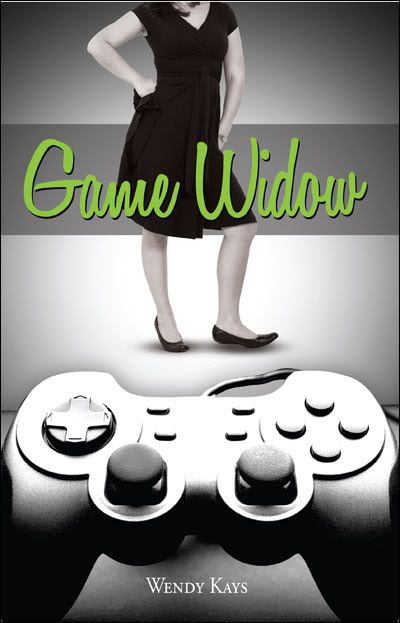
Game Widow

Game WidowGame Widow by Wendy Kays (Synergy Books, 2008, ISBN 978-1-934454-26-8)
Bonus material available.

This book was written by: Wendy Kays, who “has been married to the lead designer of the SOCOM: U.S. Navy Seals video game series for six years.” Ms. Kays is also a former game widow, but she and her husband have revitalized their once-endangered marriage into a union so strong that his accomplishments are listed first under her biography.

What is in this book: An analysis of the reasons why video games entice so many people to abandon their families, along with a look at the industry that creates them and ways to take back some of the control that they exert over our lives. This is a serious subject because “sending an adult online should have similar expectations that sending an adult to Las Vegas would,” which means that there is a real possibility that some people “will get into trouble of the mild kind, usually, and on occasion, the serious, life-altering or life-ending kind”(p.108).
In the real world, “there’s no road map with big goals broken into smaller goals that have guaranteed rewards for success”(p.8), while the virtual world can be quite rewarding, as Ms. Kays illustrates with Navarre--a fictional online persona created to demonstrate her point. “The Rare Hummingbird of Flashiness that hovers around Navarre is not only pretty and attention-grabbing, it’s [sic] presence also advertises that Navarre is one of only a few players ever to defeat the Elusive Swamp Witch, who only appears in the game once a year”(p.8). Even games designed to mimic reality are streamlined and more pleasant. “You may have to pick up dog poop in the real world, but you don’t have to clean up after your virtual pet. Or if you do, you’re insulated from experiencing the unpleasantness of bending over, fooling with the bag, inhaling the smell, and feeling the warm lump”(p.11).

What is not in this book: A chicken-livered lack of resolve. When their marriage was in trouble, Ms. Kays and her husband “felt a professional was too scary and formal, so we did what we could on our own”(p.79), which meant doing things the hard way. Ms. Kays writes that “I forced myself to listen,” but more importantly she let him talk and “continued to listen (which was extremely difficult, because I wanted to talk about me so badly)”(p.79). Despite the difficulties, Ms. Kays refused to give up. “I even had to swallow my pride and let him take the lead sometimes so he could know this was a joint effort he was part of and not just me acting like a dictator making all the new rules”(p.81).
But she had to go beyond swallowing her pride. “I made a personal rule that I couldn’t talk about him as the problem, just the problem itself. I pretended our problems had magically appeared out of thin air – with no one to blame”(p.80). It got worse for her, because “If he said I was the problem, I had to suck it up and apologize, even if I didn’t feel like I was the problem”(p.80), but it was necessary because anything else would make him think “a ‘fixing things’ talk was really a ‘wife getting time to yell at him’ trick”(p.80).
Game Widow recounts a moving story of intense personal struggle, and Ms. Kays herself writes that “humble pie was expensive emotionally, but I was willing to give up my righteous anger to get my happy life with my husband back”(p.81). It ultimately paid off because not only is their marriage restored, but “in the time my husband used to play video games at night, he is earning an MBA from a prestigious university”(p.115).

Would you recommend this book to widows of U.S. servicemen who were killed in Iraq or Afghanistan? Without reservation. Ms. Kays’ description of a game widow as “a woman whose husband might as well be dead to her because he is constantly engaged with video games”(p.xii) is as respectful to their situation as it is similar. The fact that Ms. Kays’ not-dead husband has earned a living by sensationalizing the ongoing sacrifices made by the United States Armed Forces and marketing it as entertainment can only add another layer of empathy and understanding.

Would you recommend this book to literary agents like Jeanne Fredericks or Robert E. Shepard? Yes, but not just so they can cry bitter tears into their pillows over not signing this author while they had a chance.
It turns out that “the video game industry is not like the book industry in which near-finished manuscripts submitted by eager authors can be reviewed and the best one chosen”(p.41). That means that these agents may find that their unconventional willingness to consider book proposals without reviewing near-finished manuscripts is an attitude better suited for a different field. Someone should also tell Hart Publishing that they can cut their instructions on submitting manuscripts that are not yet written and just wait for the near-finished ones to come rolling in.
Changing trades from publishing books to publishing video games would require some serious adjustments, though. With electronic entertainment, “even if the idea comes from someone who has already designed a best-selling video game, there is no guarantee on how the final product will turn out,”(p.41) which is completely unlike the publishing industry, where bestselling authors can always be relied upon to deliver stellar work.

What was interesting about this book? Ms. Kays’ startlingly plausible extrapolation of future trends based on current evidence. Gaming will cause problems in the workplace because “employers are already considering passing more of the cost of health care on to employees who are overweight or who are smokers. When and if playing video games is shown to make health conditions worse, or even cause them, gamers will be targeted as well”(p.61). In fact, “It’s only a matter of time before organized research into the health effects of video gaming is done and before the debate over who covers the costs of the health consequences of gaming begins,” and in the future “it may become as acceptable to discriminate against gamers as it is to discriminate against smokers and people who are overweight”(p.61).
However, there is still hope. After all, “if society can embrace recycling and alternate energy to impact the environment, sacrifice buying frills to save money for retirement, and avoid buying products from companies known to employ inhumane sweatshops, we can certainly sacrifice some time to carefully choose and manage our entertainment,” which will be how we can “turn the vast tide of a selfish and entitled society and an entrenched game industry”(p.116).

Digg this Stumble Upon Toolbar

Read more reviews...