Showing posts with label Books on Parenting Family and Relationships. Show all posts

March 21, 2011

Risky Business


Children at Risk: What You Need to Know to Protect Your Family

This book was written by: Dr. James Dobson and Gary L. Bauer, who both long for a return to the 1950s, a simpler time when sluts were shamed, gays were in the closet, and only other white people were threatening us with nukes.

What is in this book: Proof of a vast conspiracy to warp our children and subvert our values. "Perpetual and pernicious exposure to rock music is responsible, at least in part, for many of the social problems now occurring among the young, including the high suicide rate, the reported willingness of young men to rape women if given an opportunity, and the moral undermining of the next generation"(p.71). But rock music is only the first step. "Rock concerts subject masses of emotionally needy kids to deafening noises, eerie lights, wild behavior, and godless philosophies. Like an elephant during the night of fire, an adolescent begins to lose his grip on reality"(p.6). These impressionable youths then become easy targets for fiends who want to "teach students that gay and lesbian lifestyles are no less moral than heterosexual relationships, and that they typically involve long-term monogamous commitments"(p.64). It's part of their terrifying mission to "seek equivalent legal status of families for homosexual and lesbian partners"(p.65). Some of the more dangerous elements will even recruit these children in their efforts to "oppose with vengeance any effort to teach, or even mention, creation as an explanation for the earth's beginnings"(p.66). After seeing these diabolical influences collaborate in an organized war on family values, "Can there be any doubt that the American Civil Liberties Union, National Organization of Women, the National Abortion Rights Action League, People for the American Way, political liberals, and others have joined forces to drive for final victory?"(p.118)

What is not in this book: Shrewd legal analysis. The authors assert that "The Dred Scott case excluded Blacks from the protection granted by the Declaration. The Roe v. Wade case did the same for our unborn children"(p.153). However, other journalists have noted that this comparison is problematic, partly due to the fact that no fetuses are willing to testify in congress or venture back into the womb to rescue their oppressed brethren. The book also describes a religion-based sex ed program where "The state superintendent's office ruled that the district violated state regulations because their material acknowledged only the traditional family, gave limited information on contraception, was written from the pro-life perspective, and was presented strictly within the context of marriage. It is difficult to believe that those time honored concepts should be declared illegal today"(p.56). This is like saying that the government hates tacos because it closed a Mexican restaurant for health code violations.

Would you recommend this book to Thomas Edison? Yes. "Stability in society is dependent on the healthy expression of our sexual nature. If this energy within us is siphoned off in the pursuit of pleasure; if it is squandered in non-exclusive relationships; if it is perverted in same sex activities, then the culture is deprived of the working, saving, sacrificing, caring, building, growing, reproducing units known as families"(p.59). Hopefully, we could convince him to build some kind of sex battery, or possibly a sex generator, to conserve or replenish this energy. The fate of society depends on it! Without drastic protective measures, the internet will lead us down a dark path from which we may never return. "Fewer people realize how incredibly addictive pornography is to most boys during early adolescence. One exposure at just the right moment can capture a susceptible young man on the verge of manhood. He then begins a masturbatory habit that feeds on ever more explicit and violent material"(p. 9, emphasis in original).

Would you recommend this book to advocates of non-traditional marriage? Only if I thought it could turn them from their ruinous course of action. "Studies show that the absence of the father expresses itself in male children in two very different ways; it is linked to increased aggressiveness on one hand, and greater manifestations of effeminacy on the other"(p.183). This can only lead to children ending up as gays, rapists, or gay rapists. Of course, "some opinion leaders point to broken homes, out-of-wedlock pregnancies, and homosexual 'couples,' not as reasons for alarm, but rather as evidence of healthy family diversity and pluralism"(p.114). This advocacy has led society far from the way things used to be done.
"In 1960, out-of-wedlock pregnancy was a matter of shame. When it happened, couples often did a quaint thing—they got married, so that the child would have a name and the influence of the father. Girls who 'slept around' were often ostracized by their fellow students. A pregnant teenager was sent away to have the child rather than risk the censure of the community."(p.115)
And therein lies the tragedy of this normalization. Allowing any unwed teenager—be she a knocked-up slut or a victim of incest or rape—to hang around and flaunt her biology ends up harming not only the girl, but also the community that is forced to exclude and revile her.


What was interesting about this book? Its detailed map of the political landscape as influenced by lobbyist groups. "Today, there are few political and social movements as aggressive, powerful, or successful as 'gay rights' advocates. Homosexuality is no longer considered a dysfunction but rather an orientation or a 'sexual preference.' If you oppose homosexuality or condemn it from a moral perspective, you risk being labeled "homophobic"—a 'sickness' described as fear or loathing of homosexuality"(p.116). Fortunately, no one has developed programs to cure the sickness of homophobia that even come close to duplicating the methods or successes of the programs that cure homosexuality.

Children at Risk: What You Need to Know to Protect Your Family by Dr. James Dobson and Gary L. Bauer (Word Publishing, 1990, ISBN: 0-8499-1280-6)

Digg this Stumble Upon Toolbar

April 1, 2010

Mysterious but Superfun

This book is actually copyrighted by Mystery Method Corporation. I'm not kidding.
The Mystery Method: How to Get Beautiful Women into Bed

This book was written by: Erik von Markovik, a.k.a. "Mystery," and his good friend Chris Odom, two young men who love their mothers.

What is in this book: Tactics and strategy. Erik and Chris know that women are terrifying creatures capable of indescribable violence, which is why they are arming readers with techniques like the "shotgun", " sniper," and the "throw and go rule"(p.98-99) along with a host of acronyms and strategies to safely dehumanize the process of talking to other people (see diagram from page 144). These will help you subdue your quarry and prove your worth as a human being. After all, "if you can't attract a woman, you are, by dictionary definition, sterile"(p.xv), and your life's highest purpose is to survive and replicate ("S-and-R"). The good news is that "Just because it's a matter of life and death doesn't mean the process of attracting women can't be superfun!"(p.xiii)

What is not in this book: An unnecessarily restrictive view of women and the gifts they have to offer. You might not have realized that they have uses outside of the bedroom, but "A pivot is a female friend whom you bring into the field in order to build social proof, open sets, create jealousy, and distract obstacles. In return for her services, you show her a good time and help her to meet guys"(p.121). A pivot should not be confused with a pawn:
"With women of particular quality, it's often necessary to demonstrate preselection when gaming them. Before you open a set with a 10, for instance, you may first open an adjacent set with a 7 or 8, attract her, and put her on your arm. She is now your good natured pawn. With this demonstration of preselection firmly in place, open the set with the 10. It should open easily due to your high perceived value. Your approach is also much less threatening with another woman on your arm.
At some point when you are in A3 with the 10, where she is earning your affections, you will be able to 'choose' her over the 7. The 7 may then return to her friends, unharmed in any way.
"(p.121)

Hee hee. He said "firmly." He also said "threatening" and "unharmed," but I wasn't paying attention to that part.

Page 144. Who knew that meeting other people was so complicated?
Would you recommend this book to someone suffering from narcolepsy? That's a tough question. On the one hand, they don't have to worry about having too high of an energy level when trying to pick up women. This is important because "if your energy is too high, sets will easily hook, but closing will be more difficult and girls will more often accuse you of being gay"(p.78). However, if they fall asleep during the early parts of the book, they'll be completely confused later on when it starts telling them to do things like "If she defies your compliance test, give her an IOD, followed by a DHV and then another compliance test"(p.143, and no, those are not other names for GHB—I checked!).

Would you recommend this book to that creepy dude who is always hanging out at the public library? Yes. I'm betting he's already familiar with the idea that "all humans possess a built-in motivation to stay away from people with low or negative social value"(p.17), but he would be interested to learn that "being bubbly and wanting to dance" is actually a shield that women use "to protect themselves from men with a low perceived S-and-R [Survival and Replication] value"(p.75). He would definitely agree with the passage about how "not holding her hands, smelling her neck, or kissing her during the comfort stage can trap you [in the sex-free "friend zone"]"(p.59) and its furtherance of a pro-neck-sniffing agenda.
Mostly, I think it will save him the trouble of checking out a copy of Eugenics for Sex Offenders. "Just as a superior basketball player limited by lousy teammates must escape and join a better team in order to win, so, too, must a superior gene escape from its inferior gene-mates and be given a chance to join a better genetic team for its continued survival. This method of escape is called crossbreeding"(p.11, emphasis in original).

Page 12. He seriously refers to picking up chicks as Venusian arts.
What was interesting about this book? Subtle nuances are essential for both the accomplished pickup artist and the reader of this book. On the one hand, "there is only one type of close, really: sex. Are you a closer?"(p.189, N.B., "sex" was in boldface in the original). However, slipping it to some skank in "a nearby bathroom stall [....] is a fool's mate fantasy and not solid game"(p.57-58). Similarly, if you decide to approach a woman because she is attractive, "we cannot let her know we're choosing her based on looks because it doesn't seem genuine and makes us appear like other typical men"(p.53).
It is also interesting how comprehensive the book's advice is, covering every aspect of meeting and breeding women up to and including overcoming their resistance to the idea of sleeping with you. "Last-minute resistance is a fear that women experience just prior to having sex, similar to the way that men experience approach anxiety. It is your responsibility to ease her through this"(p.206). Yeah, ease her through it all night long.

The Mystery Method: How to Get Beautiful Women into Bed by Mystery (Erik von Markovik) with Chris Odom (St. Martin's Press, 2007, ISBN: 978-0-312-36011-5)

Digg this Stumble Upon Toolbar

March 15, 2010

Abort, Abort!

I wonder how Dr. Grant feels about abortion?
Grand Illusions: The Legacy of Planned Parenthood
Bonus material available.

This book was written by: George Grant, an activist and pastor who previously worked for D. James Kennedy.

What is in this book: A startling exposé on "the Planned Parenthood Federation of America and its sundry institutional cohorts in the abortion industry"(p.xxv), including those genocidal maniacs at the March of Dimes(p.174). It is bad enough that "the [Planned Parenthood] organization continually misrepresents the facts about its lucrative birth control, sex education, and abortion enterprises"(p.83), but they also stand for values that are identical to those espoused by heretical sects of the 13th century. "Virtually every major dogma of those heretical sects is a plank in the Planned Parenthood philosophical platform: promiscuity, greed, deception, revolution, socialism, abortion, sorcery, birth limitation, and materialism"(p.256). That's right, he said sorcery. He's on to you, Planned Parenthood, and he knows all about your secret plan to trick women into getting pregnant just so you can force them to have abortions. "In other words, the Planned Parenthood system virtually guarantees that women will get pregnant—and that they will then be 'forced' to fall back on the birth control lynch pin: abortion"(p.26).

Those rent-a-cops do NOT play around.
What is not in this book? Clinical detachment. Dr. Grant is an activist who is literally not afraid to get his hands dirty. He opens the book talking about the time he was in a car chase fleeing a hail of gunfire, pursued by a security guard trying to stop him from stealing a dead baby out of the dumpster behind an abortion clinic. And the guard looked like he meant business. "His crisp blue uniform played a stark contrast against the alley's cudulent clutter. The gleam of chrome and polished leather threw flitting reflections of sunlight on the ground, shattered triangles of morning brightness skipping across the discarded baubles and forgotten fascinations that composed the heaps of garbage between him and me"(p.11)

Would you recommend this book to a fan of pornography? No, I would recommend that they get their hands on some of Planned Parenthood's educational videos. Dr. Grant describes one of them:
"'I've never seen pornography before,' Catherine admitted. 'But this film was worse than what I could have ever imagined hard-core pornography to be.'
The film was extremely explicit. An unashamedly brash couple fondled each other in preparation for intercourse. At appropriately prurient moments of interest, the camera zoomed in for close-up shots—sweaty body parts rubbing, caressing, kissing, stroking, clasping, petting, and embracing. At the height of passion, the camera fixed on the woman's hands, trembling with ecstasy, as she tore open a condom package and began to slowly unroll its contents onto her partner.
[....]
Afterwards, several of the girls began quietly sobbing, another ran out of the room and threw up, still another fainted. Mercifully, the class ended just a moment later.
'I have never been more humiliated in all my life,' Catherine said. 'I felt dirty and defiled after seeing the film. [....] It was horrible. It was like I'd been raped. Raped in my mind. Raped by my school. Raped by Planned Parenthood.
"(p.127)
I have seen pornography before, but clearly I have been wasting my time with the wrong stuff.

Would you recommend this book to someone about to have an abortion? Yes. It might give them an idea of what awaits them on the trip to the clinic:
"Every thirty minutes for the next two and a half hours, we watched as a fresh clutch of doe-eyed girls were whisked into the clinic by 'pro-choice escorts.' They met the girls at their cars and quickly aimed them up the sidewalk. They snarled at our offers of help and batted away our literature. If a girl displayed the least hint of hesitation, the 'escorts' would take her by the arm and rush her toward the door. So much for 'choice.'
When, despite their best efforts, a frightened and confused teen slipped their grasp and turned aside to talk to one of the protesters, to read a Gospel tract, the 'escorts' flew into a frenzied rage.
"(p.16)
An artistic representation of the response from Planned Parenthood.Try comparing this to accounts from some of the escorts. One side of this face-off is clearly exaggerating for dramatic effect. However, the way that Dr. Grant observes a security guard at the event and notes that "his anger was hidden and subversive. It was tucked neatly into the dark folds of his uniform like a murderer's knife hidden inside an old coat on a closet shelf"(p.17) tells me that he's not normally given to creative embellishment.

What was interesting about this book? Dr. Grant has found Planned Parenthood's response to his book to be wholly unsatisfactory, especially the one that "purports to be a book review—despite the fact that it is less than five paragraphs and three hundred words long"(p.xxvii). According to Dr. Grant, an internal Planned Parenthood memo also issues a request, "please do not encourage Mr. Grant"(p.xxvii).

Special award: Because of his sense of cadence, his ear for aliteration, and his knack for vibrant descriptions, Bitterly Books is awarding Dr. Grant with the Nipsey Russell Commemorative Order of the Warrior Poet.
NIPSEY!
Did you notice Dr. Grant's use of the made-up word "cudulent" earlier? He also notes that the process of writing this book "surprised me with its fervid fervor,"(p.xxiii) as on his quest to save the unborn "I was confronted with the central anomaly of these modern times: a liberal lust for life, a lavish love of life, a luxuriant litany of life, and yet, simultaneously, a leaden loathing of life."(p.13)
His lyrical prose is capable of inciting readers to action, noting that "we need to battle the blazing concupiscence of Planned Parenthood's sex education programs [....and] rescue our own children from the flickering flames of promiscuity and perdition"(p.146). His work can also contain inscrutable wisdom, cryptically noting how "memory is a madman that hoards my colored rags and throws away my precious gems. Prescience is a school-marm that belabors what I ought to be and ignores what I thought to be"(p.18).
Bitterly Books is thrilled to induct Dr. Grant into the esteemed and august Nipsey Russell Commemorative Order of the Warrior Poet, but the occasion is perhaps best marked by some words from Dr. Grant himself:
"The city's gestalt of raw tension and hungry ambition calves its persona like an Arctic berg—splinters drifting away. The eclecticism is everywhere evident. It is a bright matrix of contradiction unfolding across a tantrum of logic and illogic, of antiquity and modernity, of substance and illusion, of objectivity and bias, of bondage and freedom, of honesty and deception"(p.184)
At least, I think that quotation is appropriate for the occasion. I'm not really sure what it means.

Grand Illusions: The Legacy of Planned Parenthood (4th Ed.) by George Grant (Cumberland House, 2000, ISBN: 1-58182-057-7)

Digg this Stumble Upon Toolbar

March 1, 2010

Hey, Ladies! Fill Your Funnel!

Love is not a battlefield, it is a sales pitch.

You Lost Him at Hello: A Saleswoman's Secrets to Closing the Deal with Any Guy You Want

This book was written by: Jess McCann, dating consultant and reality television contestant.

What is in book: Ms. McCann's distilled sales expertise, as practiced in the meat market. For example, a skilled marketer finds success through volume. "Think about it, you can either date one man every six months and then in five years you will have dated ten guys. Or you can date ten guys in one year and in five years you will have dated fifty guys!"(p.85). It's also important to package yourself properly. "When you first start dating someone you want it to be pretty obvious that other men find you attractive,"(p.138) but be careful, because "telling a guy that you're a catch isn't going to convince him that you are one"(p.23). This business-oriented approach to dating may be off-putting to some readers, and "when I first began discussing the correlation between dating and sales, many of my friends had a hard time accepting the idea because of the stigma behind it"(p.17). However, you may not be aware of the fact that you're already selling things all the time. "From the moment you wake up and decide what outfit is most likely to impress your boss, until later that night when you convince your girlfriends where to eat dinner, you are constantly engaging in sales"(p.18). So get out there and sell your heart out, literally! (Just be sure that no money actually changes hands, because that would be illegal.)

What is not in this book: Dirty euphemisms. Oh sure, McCann talks about how "Anne should have been filling her funnel all along, instead of presuming that she and Charlie were a couple with a future,"(p.80) and "never let the funnel dry up. It's a cardinal rule,"(p.78) but it's about your funnel for sale prospects, so get your mind out of the gutter.

His life's work subverted for an off-color joke.Would you recommend this book to Emily Post? Yes. Despite urging you to date early and often, Ms. McCann is a model of restraint. "In dating, bullets are a woman's valuables, such as kissing, making out, and the biggest bullet of all, sex [....] If you throw out all your bullets right away, you have nothing left to keep a man's interest"(p.144). There are dire consequences for giving it all away too soon:
In the back of his head he will always think you sleep around. It won't matter if you tell him that you don't typically do that sort of thing and he's the only one you have ever done this with. All he will hear is the Charlie Brown schoolteacher: "Womp womp, womp womp."(p.151)
And that "womp womp, womp womp" will be the bedsprings! Am I right, fellas?

Would you recommend this book to women who do not enjoy playing games? Yes, because they had better learn to love it if they're serious about finding a man. Ms. McCann mentions that some women out there think that "doing what they feel like seems natural, and dating strategically sounds too orchestrated. What they want is to meet someone, be honest about their feelings, and have someone love them for who they are"(p.30, emphasis in original). These women are doomed.
The fact is that:
Girls that say they don't play games either:
1. Don't know how to play,
2. Are too lazy to play, or
3. Don’t have enough discipline to play.
(p.32)

FILL THE FUNNEL. Hopefully linking to the Seattle Weekly article that used this photo fulfills my attribution requirements.What was interesting about this book? Honesty is worthless. "You can never convince someone to date you, let alone love you, by telling them how much you need or love them"(p.21). So stay aloof, keep him interested, and never show your true colors. "Remember, as long as a guy is not 100 percent sure of how you feel about him, he will be afraid he could lose you at any moment, and that fear of loss will keep him begging for more"(p.197). Ms. McCann recognizes that this path may be difficult, and that you may be tempted just to lay it all on the line and be up front with him. "Unfortunately, you can't do that. Whether you like it or not, relationships just don't work that way, especially in the beginning"(p.30). And most importantly, DO NOT LET HIM FIND YOU READING THIS BOOK. "If you tell him you are doing all these things on purpose, with an agenda, he really will think you are playing a game"(p.126). Date as many men as you can, let them know you're attractive but don't directly tell them you're a catch, and get your head in the game even though he can't find out that you're playing a game. "Remember ladies, fill the funnel"(p.85).

You Lost Him at Hello: A Saleswoman's Secrets to Closing the Deal with Any Guy You Want by Jess McCann (Health Communications Inc., 2008, ISBN: 978-0-7573-0713-3)

Digg this Stumble Upon Toolbar

November 15, 2009

Power Play

Playing with power is apparently trademarked.The Power of Play: How spontaneous, imaginative activities lead to happier, healthier children by David Elkind, PhD (Da Capo Lifelong Books, 2007, ISBN: 978-0-7382-1053-7)

This book was written by: David Elkind, professor emeritus of child development at Tufts University. Dr. Elkind grew up without a lot of the newfangled gadgetry surrounding today's children, and:

We were a working-class family and my parents had enough to do keeping a roof over our heads and food on the table to worry much about our daily ups and downs. They were pleased with our achievements but did not play favorites. And because they sacrificed so much to give us a better life, we had a different attitude than many children today. We were less concerned with what our parents could do for us and more with what we could do for our parents(p.70)

Rumors that Dr. Elkind was the inspiration for Dana Carvey's "A Grumpy Old Man" character are completely unfounded.

What is in this book: Dr. Elkind's challenge to modern parenting techniques. These days, "concern, on the surface at least, for children's physical well-being appears to outweigh worries about their innocence"(p.79). It's a problem because "children are not allowed to play on their own to the extent that they once were [....] This robs children of the opportunity to innovate and learn from their risk-taking behavior"(p.80), like the way that the innovative, unsupervised children in Lord of the Flies taught Piggy not to play near falling rocks.
Modern toys take a toll on the imagination of children. "Toys, about which children once spun elaborate personal fables, now engender little more than habits of passive consumerism"(p.ix), and children lose out if they neglect imagination-based forms of play like role playing. "In playacting, the child accepts the fact that she is playing a different role. Play becomes another way in which children further their understanding of rules and the concept that one thing can be two things at the same time" (p.134), like how LARP enthusiasts can simultaneously be pathetic in the real world and slightly less pathetic in their fantasy world.

What is not in this book: Baseless nostalgia. Dr. Elkind offers empirical proof that things were better back in the day because "the majority of toys are now made of plastic. These playthings generally lack the warmth of wood, the texture of natural fabrics such as cotton or wool, or the solidity of metal"(p.15). With the exception of Hot Wheels tracks, they are also less effective at dishing out a beating. "In my childhood a cannonball was made of slices of automobile inner tube tied together to make a huge rubber band. [....] believe me, when you got hit by one of those things, you knew about it"(p.78). The playthings of years past were also more closely connected to nature. This is important because "if young children spend too much of their waking time with playing with chip-embedded toys or computers or watching television programs, they will have less time to interact with the elements and learn the lessons the elements [earth, air, fire, and water] have to teach"(p.132), and that leaves them completely unprepared to discuss the four humours with Hippocrates at the Agora.

Roller Derby chairfights. Why not?Would you recommend this book to fans of WWE wrestling? Sadly, no. Observe how the following sequence takes many of the action components enjoyed by WWE fans, such as flying chairs and trash talking, and ends up with a thoroughly unsatisfying conclusion:

One of the children in the school, Ron, was a bright young man but quick to anger. One day, when another child knocked over his toothpick sculpture, he picked up one of the child-size chairs and charged at the offending youngster. I intervened, put my arms around him and the chair, and said, "Shall we dance?" Ron had to smile, although now he was angry at me for grabbing him and stopping his attack. After we put down the chair I said, "It is okay to get angry, but we have to use words to tell people we are angry at them, not hit them with things." A few days later I stopped by Ron's desk and said, "Ron, I have some good news for you: I have to go to the dentist." Without raising his head, he replied, "I hope you have a thousand cavities." Ron had learned how to express his anger with words(p.181)

Ron may be quite the comedian, but he's no Ric Flair.

Would you recommend this book to fans of social networking and electronic entertainment? Probably not. Dr. Elkind's description of adolescence, where "each adolescent creates his or her own imaginary audience. Every adolescent assumes he or she is an actor, and is more concerned with being observed than with observing"(p.66), might sound uncomfortably familiar.
Meanwhile, "children who have spent a great deal of time watching television may not have the auditory discrimination skills necessary for decoding phonics. With television children follow the law of least effort—get the information as easily as possible"(p.127), which explains the rise of textspeak. Of course, on the other side of the coin, "parents and grandparents are often misled by a young child's verbal precocity and assume that it is an index of intellectual giftedness. Most often it is not"(p.121).
As to other electronic entertainment, "with the exception of computer games tied to curriculum content, there would seem to be little transfer of the skills acquired in playing these games to everyday practical or academic skills"(p.58).

A mole? With sunglasses? HILARIOUS.What was interesting about this book? Dr. Elkind's insights into children's entertainment. It turns out that "what makes children laugh is anything that goes against their expectations, such as a mole wearing sunglasses or a grown-up taking a pratfall"(p.173), but if being an adult no longer means laughing at moles in sunglasses, I never want to grow up.
More importantly, cartoons these days provide children with terrible role models. "Fred Flintstone and George Jetson never let work get in the way of having fun. Bob the Builder and SpongeBob SquarePants, on the other hand, love their jobs. SpongeBob was even named Employee of the Month at the fast food restaurant where he works"(p.ix-x). Just what are they trying to teach our children?

Digg this Stumble Upon Toolbar

October 1, 2009

If At Firstborn You Don't Succeed

I have spent this whole time trying not to spell it as Fristborn.Growing Up Firstborn: The Pressure and Privilege of Being Number One by Dr. Kevin Leman (Delacorte Press, 1989, ISBN: 0-385-29769-6)

This book was written by: Dr. Kevin Leman, author of Sex Begins in the Kitchen. Dr. Leman believes that a person's position in the family (firstborn, lastborn, etc.) influences their personality, and "finding out about birth order could potentially save any business millions of dollars every year. You could figure out which individuals would make the best salespeople, the best sales managers, which are the most organized, and so on"(p.20). Dr. Leman considers James Dobson "my good friend"(p.141), while Dr. Dobson has told Dr. Leman that "before you do anything, whatever it is, run it by [your wife] Sande first"(p.188).

What is in this book: An examination of the unique characteristics present in firstborn children. "If you want something done properly, get a firstborn to do it! No wonder so many firstborns are doctors, lawyers, engineers—they sit on school boards, on city councils, and in the United States Congress in numbers far greater than their percentage of the population as a whole would dictate"(p.8). Furthermore, "more than half (52 percent [as of 1989]) of the U.S. presidents have been firstborns, and if you want a dramatic example of the differences that exist between firstborns and lastborns, consider Jimmy and Billy Carter"(p.22). These traits are developed by the attention and treatment received by firstborn children. For example, they are expected to do most of the household chores, even though "Little Buford may be the youngest, but he can pick up those dog plops in the backyard and toss them over the fence into the neighbor's yard as well as anyone else in the family"(p.6). And "just as the firstborn child of an alcoholic parent offers suffers the most from his parent's addiction, it is usually the firstborn daughter who must deal with being raped and used by her own father"(p.225). This kind of treatment builds the character necessary to succeed in life, so "please give your folks a break and try to understand that they most likely didn't intend to treat you badly. It's just that they didn't know any better"(p.60).

What is not in this book: Indifference to the burdens that women—especially firstborn women—are forced to bear in modern society. For example, the author discusses how the pressure of being the firstborn child drove one patient to overating, and now "Sandra is a very pretty woman, but this is offset by the fact that she is at least 30 pounds overweight. She is a classic example of the overweight woman who has 'such a pretty face'"(p.55). Dr. Leman points out how women are either disappointed that they cannot live up to society's unobtainable ideals, or deluded into thinking that they have achieved them, like the way that on The Dating Game, "the 'bachelorettes' invariably describe themselves as eights, nines, and tens, which a lot of the time makes you think they bought their mirrors from a carnival funhouse!"(p.94). Also, these days "I am seeing more and more single mothers who are trying to raise their daughters without the benefit of a man's presence in the family, and that is an awfully hard thing to do! [....] Unless there is a positive male influence in the family, the girls will often begin to strike out at one another and at their mother"(p.154).
And then there are the women struggling with past sexual abuse. Dr. Leman has dealt with a large number of abuse victims, and "I have come to the point where I ask my female clients, almost as a matter of routine, 'when were you first molested?'"(p.224) He views this as a serious problem, noting that "I think of sexual abuse as being like taking the finest piece of cloth you can buy, ripping it in half, throwing the pieces in someone's lap, and saying, 'Here, take this to a good seamstress, and you'll never know the difference'"(p.228). You can try to disguise it, but it's still ruined.

For my next trick, I'll command you not to sacrifice your son while he drinks a glass of water.Would you recommend this book to Isaac? No. I would recommend that he read a book about ventriloquism. Introspection and psychological development may be useful, but when your dad is dragging you up mount Moriah with a knife in his hand and a wild look in his eye, it's a good time to know how to throw your voice.

Would you recommend this book to Goofy? No, but it does offer some fascinating insights into his character:

"The next time you feel angry because you've goofed something up or because someone is putting you down, laugh. You may have to force yourself. It may take every bit of energy and acting skill you have, but put a smile on your face and let it roll off your back. You may be dying inside, but you don't need to let anyone else know that."(p.78)

That "Hyuk" laugh of his probably means that he spends all his time in a seething rage.

What is interesting about this book: The suggestion that not all men want to marry their mother. "The marriage of a firstborn female who has younger brothers to a lastborn male with older sisters has a great chance to be especially happy and harmonious"(p.255) Dr. Leman, a lastborn, cites his own marriage as an example, showing how his relationship with his sister taught him how to interact with women:
I remember one of our early conversations, for instance, which went something like this:
"Do you like girls?"
"No way! Yuck, why would I like girls?" I was busy making a scooter, and I didn't even look up. I couldn't figure out why she was bothering me at a time like this. Yes, sir, these old apple crates were going to be perfect for the body, but where was I going to find the right wheels? Hmm . . . I wondered if Sally's old pair of roller skates might work.
"Do you like me?"
This seemed like the best time in the world to like her very much, especially when I thought about those skates.
"Of course I do!"
"But I'm a girl."
"Well, that's different. You're my sister. And you're not like any of the other girls I know. By the way, Sis, you remember those old skates . . ."
"Well, I want to tell you a few things about girls."
Maybe I didn't really want to hear it, but Sally was going to tell me anyway, and so she did. She told me what girls were like, how they ought to be treated, and how you could go about getting a particular girl to like you.
[....]
I often think that it's no wonder I married a firstborn, when I got the sort of treatment I received from my firstborn sister!
(p.246-247)

In fact, Dr. Leman dedicates Growing Up Firstborn to his sister, writing that "You have taught me so much about life that only a big sister can teach a little brother".

Special Award: Bitterly Books is presenting Dr. Leman with the Holy Hat Trick Commendation for Evangelism, Drug Intervention, and the Promotion of Abstinence for turning a potentially hostile situation to his advantage with keen observational skills and good Christian morals.
In Growing Up Firstborn, Dr. Leman recounts how he was appearing on a radio show to promote his book, Sex Begins in the Kitchen. When he looked at the DJ in the broadcast booth, "I noticed for the first time that his eyes were glassy and his pupils dilated. The man appeared to be stoned"(p.161). Dr. Leman took a non-confrontational approach so as not to provoke the drug-addled maniac.
Unfortunately, this put Dr. Leman in a perilous situation when the DJ asked him to answer a question from a 24-year-old virgin who wanted to know if she should save herself for marriage. The DJ "thought I was going to tell this young woman to quit being ridiculous, to get on with 'life,' and probably to give her virginity to the first man who wanted it"(p.162).
Dr. Leman rose to the occasion by giving a morally responsible answer, identifying himself as a born-again Christian, and getting the DJ to admit that "You guys know how I feel about these things—but I kind of like what this guy is saying. I think he's making a lot of sense"(p.163). All while promoting Sex Begins in the Kitchen.
Hopefully, Dr. Leman's message stuck with the DJ even after the drugs wore off, but in the meantime we hope he enjoys his award.

Digg this Stumble Upon Toolbar

September 1, 2009

Sealing Deals with Dudes

A great start for women who want men to tell them what to do for the rest of their lives.Closing the Deal: Two Married Guys Take You from Single Miss to Wedded Bliss by Richard Kirshenbaum and Daniel Rosenberg with cartoons by Marisa Acocella Marchetto (William Morrow, 2005, ISBN: 0-06-059009-2)

This book was written by: Richard Kirshenbaum, who is co-chairman of an advertising agency, and Daniel Rosenberg, who is a film studio executive and producer. They are "just regular guys who know what speaks to other regular guys"(p.x), because "our opinions have been formed by years in fraternities, locker rooms, and of course, bachelor parties, and we can say with some accuracy that we know what men are thinking"(p.113). They also point out that "the very fact that we're not therapists, relationship counselors, doctors, or women makes us uniquely eligible to share insights that really matter"(p.x).

This book was endorsed by: Hillary Swank, who says on the back cover that "I don't know how I ever closed the deal without Closing the Deal." Ms. Swank filed for divorce in 2006.

What is in this book: A battle marriage marketing plan. "Just as an architect has a blueprint or a writer has an outline, you can create your very own marriage marketing plan [...] We'll reveal the subtleties of marriage maneuvering, thus helping you to ultimately hone your marriage marketing skills"(p.21, emphasis the authors'). This may seem cold and calculating, but "the man you get into bed with, the guy you want to father your children is, when it comes to closing the deal, the Opponent"(p.22). "While you may think that our use of the word maneuvering indicates that we're advocating subterfuge, we're not"(p.27, emphasis the authors'), although they do warn that "if you have a reputation from your vast past sexual experiences and something catches up with you, remember the following three words: deny, deny, deny"(p.119, emphasis the authors'). Mr. Kirshenbaum and Mr. Rosenberg acknowledge that "marketing marriage and yourself isn't fun, but in some ways it's a necessary evil. Like big business, it's hard work and requires practiced finesse"(p.40). Luckily, you can start at any time. "Whether you've been together for a while or are just starting to date, it's never too late to micromanage how you relay any information"(p.107).

A soul patch? Really? She can do better.What is not in this book: Unnecessarily complex language. The authors keep the tone conversational, noting that if you're serious about finding a husband, "we need to spend time discussing your monthly hormonal hoedown"(p.73). They also try to see the bright side in every situation, like the way that men expect women to resemble their mothers as they age. "If your mother weighs in at 290, tell him how she goes up a bra size every few years"(p.37). And when it comes to grooming your private area, "these days not a lot of men are hunters and they don't seek out the heavy bush"(p.45).

Would you recommend this book to that single coworker of yours who is just a shade past her prime—will it keep her from becoming a crazy old cat lady? No, I would recommend that she stock up on TV dinners and slankets, because it's too late for her to avoid dying alone and unloved. If she's lucky, her body will be found before the cats have had much time to gnaw on it.

Would you recommend this book to George Clooney? I would, because his character, Dr. Doug Ross, is responsible for my misunderstanding of how easy it is to get married. Dr. Ross explicitly stated that the first date is when you get a kiss goodnight, the second is when you get invited inside, and the third is when you "close the deal." This book makes closing the deal seem much more complicated, but maybe everything is simpler when you're George Clooney.

Sprechen sie Sassy?What is interesting about this book? The Bizarro-universe logic that governs the male mind. In addition to thinking of your prospective groom as an opponent, a number of other rules of engagement that you should follow run counter to common sense. "It's always important to give him the impression that, like a stock, you're selling high"(p.29), but savvy traders dump a stock that is selling high.
Nowhere in this book is the chaotic, up-is-down, black-is-white logic of the male mind illustrated more clearly than in the chapter covering "the bluff." It's a bluff because it's "the act of breaking up with your boyfriend who won't commit, yet keeping the door open should he change his mind"(p.229). "We have to stress that this doesn't mean giving ultimatums. Ultimatums are aggressive and have a tendency to put men on the defensive"(p.139). However, "bluffing is different because it's pushing the negotiation to a head: Either you're getting married or you're out of there. And you have to mean it!"(p.133) It's important to understand that the bluff is not about whether or not you'll leave him—you will. The bluff is about whether you're worth fighting for. You may not be. "Nothing will be clearer to you if soon after your bluff the locksmith van pulls up as you load your suitcase into the cab: You didn't have a winning hand"(p.134).

Digg this Stumble Upon Toolbar

August 15, 2009

Satanism and Sex Education

They're really more lessons in mid-grade perversity.Lessons in Depravity: Sex Education and the Sexual Revolution by E.S. Williams (Belmont House Publishing, 2003, ISBN 0-9529939-5-3)
Bonus out-takes

This book was written by:Dr. E.S. Williams, who feels that "comprehensive sex education is not only ineffective in achieving its stated objective of reducing sexual tragedies, but that it contributes to the problem"(p.10), encouraging the staging of tragedies like Stiff Hamlet, King Lear Gets Crowned, and Coriol-Anus. Dr. Williams himself is a tragic figure because his work as director of public health for Croydon Health Authority pitted him in a losing battle against the powerful sex education lobby that constantly undermined and perverted the government's efforts.
For example, "[In 1991] the sex education lobby, claiming that AIDS was the largest public health threat of the twentieth century, was being provided with large amounts of money for its ‘safer sex’ propaganda. [....Figures from 2000 show that] the epidemic predicted by the Department of Health proved to be a gross exaggeration"(p.232). The money spent to prevent an AIDS epidemic in the U.K. was completely wasted because "by the end of 1997 it was becoming clear that the threatened AIDS epidemic had fizzled out"(p.238).

What is in this book: This study, which combines the stirring and impassioned rhetoric of an IRS publication, the open-minded tolerance of Draco’s Athenian constitution, and a dedication to footnoting and citation not seen since An Analysis of Section 16 of the Securities Exchange Act of 1934*, chronicles shocking facts about sex education efforts in the United Kingdom over the past six decades.
"While [the North Ireland sex education program(me)] Love for Life claims that its purpose is to encourage young people to delay sexual intercourse, it also believes that giving young people information about contraception and sexually transmitted diseases helps them to make an informed choice about whether or not to have sex"(p.17). As horrifying as this sounds, it gets worse. By citing a case where "the Government, using all the powers of mass media, the machinery of official-dom, the propaganda of the sex education lobby and the influence of the medical profession, had won the legal battle to provide contraceptives to children without the knowledge or consent of their parents,"(p.212) Dr. Williams provides irrefutable proof for his claim that "clearly, a key aim of the Government’s teenage sexual health strategy is to ensure that children have easy access to contraceptives and, in case of a slip-up, access to emergency contraception"(p.3-4). And if it wasn’t bad enough that "CARE [Christian Action, Research and Education] teaches that children ought to make sexual decisions on the basis of feelings generated by self esteem, rather than the certainties taught by biblical morality,"(p.291) it turns out that "the IPPF [International Planned Parenthood Federation], the organization set up to promote the ideology of Margaret Sanger, advocates that sex education, family planning and legal abortion should be accepted as human rights"(p.241). Naturally, this must all be stopped.

*Clearly, using footnotes is serious business. Dr. Williams has forgone footnotes in favor of endnotes, but he uses 1,033 of them, at an average of 49 endnotes per chapter, or 3 references per page.

What is not in this book: How-to lessons on quad barebacking, inverse horseplay, or 'the split canoe' (which, in the U.S., is a felony in 32 states). This book manages to report on the lessons in depravity taught to defenseless schoolchildren without going into detailed descriptions. Dr. Williams refrains from duplicating the graphic offenses present in sex education materials because "Christian believers do not indulge in lewd and indecent language. The sex talk promoted by sex education is completely unacceptable"(p.249).
Dr. Williams also notes that "it is not difficult to see the similarity between the Canaanites and the modern day sex educators. Both are amoral, both have deified sex and both are devotees of depraved sexual practices"(p.254), specifically mentioning that people accused the Canaanites of doing detestable things, and "the detestable things included human sacrifice, demonism, homosexuality, lesbianism and incest"(p.253).
Dr. Williams maintains his restrained, sober approach for this subject because "it is vitally important for men, women and children to avoid anything that may arouse sexual lust"(p.262). Despite this self-censorship, the study remains coherent and informative. It describes how "the sex education lobby was raving about [the book] Make it Happy, [but] others were disturbed by the amoral advice that was being given to young people. George Gardiner (MP) said it was enough to make parents’ hair stand on end, and Ronald Butt described it as the filthiest sex education book he had seen"(p.175). When it comes to filthy, we don’t second-guess the opinion of Mr. Butt.

Would you recommend this book to a pack of unruly chavs? Normally, I’d say hell no, slap an ASBO on those hooligans and let prison sort them out. However, the nation’s youth need to learn that they face danger from radicals like Alfred Kinsey, who "vigorously promoted, juggling his figures to do so, a hedonistic, animalistic conception of sexual behaviour, while at the same time he consistently denounced all biblical and conventional conceptions of sexual behaviour"(p.81). "It is clear that Kinsey was not an objective scientist, as he claimed, but a dedicated sex revolutionary,"(p.90) and we cannot let children be subverted by revolutionaries like him or like H.G. Wells, who "was a persistent advocate of an almost completely amoral freedom"(p.67).

We Are Not Aroused.Would you recommend this book to Queen Victoria? Yes. Dr. Williams admires the morals of the Victorian era, and her royal highness would agree with his remark that "the woman who displays herself is foolish for she is attracting men for all the wrong reasons"(p.256). She would also want to do something about the ways that sex educators were trying to overcome "the innate, God-given, emotional response of embarrassment that has the function of protecting against sexual indecency"(p.261). In fact, "this is why sex education has developed techniques for overcoming embarrassment [.... so that] sex educators, with their desensitized children, can plummet the depths of depravity in the name of ‘safer sex’"(p.261).
Once that protective embarrassment is out of the way, sexual revolutionaries are "teaching young people in a climate that encourages promiscuity and homosexuality"(p.31) where "boys, in their fantasy life, imagine that girls really do want to have sex"(p.262). This is a terrible thing because "a chivalrous man understands that for a woman there is no such thing as casual sex, for she bears the awful responsibility of conceiving a new life and all that that involves"(p.259).

What was interesting about this book? Teenage pregnancy rates are alarmingly high in the United Kingdom. The Daily Mail—an unbiased news source not given to reactionary conservativism—recently reported on the failure of an experimental sex education program and profiled a girl who had 4 abortions by the age of 16, behavior which we must assume is typical of the average British teenager. It is proof that "sex education is one of the devil’s cunning schemes we are warned about in the sixth chapter of the Ephesians"(p.310).
More than satanic schemes, "it is arguable that the explicit images of sex education are, in reality, part of a modern phallic cult that worships at the shrine of sexual gratification. The explicit images are designed to inflame the imagination, and make young men and women burn with lust"(p.263). Fortunately, Dr. Williams shows that we can fight these cultists with Christian virtues. "Christian sexual conduct is expressed in the four virtues—modesty, chivalry, chastity, and fidelity [....] these are the Christian virtues that guard children from danger and abuse—they provide children with God-given security, protecting them from the ravages that result from sexual immorality"(p.250).
As Dr. Williams says, "it is the responsibility of all parents, Christian and non-Christian alike, to teach their children a moral framework on which to base their lives, and this is especially true when it comes to sexual conduct"(p.307), which is why we need to dismantle existing sex education programs and go back to the days when the youth of Britain learned about sex from "Benny Hill" episodes and Viz comics.

With his biblical views on sex education, some may dismiss Dr. Williams as crazy. But he's crazy like a FOX. No, crazy like three foxes—on a meth binge—that have made a rudimentary catapult out of a fire extinguisher and some old tires that they’ll use to launch a family of snapping turtles duct-taped to a cinderblock as a distraction so that they can sneak in the back of a drugstore to steal cold medicine so they can make more meth.

Digg this Stumble Upon Toolbar

April 1, 2009

This Kid Is The Bomb

The Explosive Child: A New Approach for Understanding and Parenting Easily Frustrated, Chronically Inflexible Children by Ross W. Greene, PhD (HarperCollins, 2001, ISBN: 0-06-093102-7)

This book was written by Ross W. Greene, PhD, who “specializes in the treatment and study of explosive children and adolescents at home and school and in inpatient units, residential facilities, and juvenile justice facilities,”(p.335) although he is not particularly well-known for research in the fields of either military ordnance or spontaneous combustion.

What is in this book: A discussion of what makes an explosive child, and how to deal with one. The explosive child throws a tantrum at the slightest provocation; this is illustrated by the hypothetical scenario at the beginning of the book where one such child “pushes her mother out of the way, seizes the container of frozen waffles, then slams the freezer door shut, pushes over a kitchen chair, grabs her plate of toasted waffles, and stalks to her room”(p.2).
Their sensitivity and over-the-top outbursts may sound funny, but “the parents of inflexible-explosive children do not describe meltdowns with good humor”(p.23). Unfortunately, these children have been given a raw deal genetically, a “brain-based failure to progress developmentally”(p.14). “Some children—no matter how hard they and their parents, teachers and coaches try—are just not ‘built’ to be great athletes, readers, or spellers”(p.10). Similarly, inflexible-explosive children are not “built” to handle challenging situations like frozen waffle shortages (p.1), chili being offered instead of macaroni and cheese (p.62), chicken pot pies being served incorrectly (p.143), being told to stop eating cookies (p.164), and jugglers in Harvard Square performing without a permit (p.76).

What is not in this book: The same old approaches to managing problem children, because inflexible-explosive children can't be stopped, reasoned with, or beaten senseless when they are in the grip of a frustration-induced meltdown—your Earth weapons traditional parenting methods are useless against them because “punishing a child during meltdown has the potential to fuel his frustration even further and, as you may have found, may not decrease the odds of a meltdown the next time he’s frustrated”(p.23). Parents of inflexible-explosive children either have to recognize potential meltdowns before they happen and intervene immediately, or brace themselves for the worst and ride it out. “I use the term mental debris to describe the horrible words that may come out of a child’s mouth during these incoherent moments”(p.23), and you'd better learn how to shrug it off, you “freaking bitch”(p.203), because the kids don't really mean it and won't be stopping it anytime soon. If you're the kind of person who thinks “I just can’t tolerate disrespect. My immediate reaction is to start screaming”(p.199), you’re kind of screwed.

Would you recommend this book to Jack Bauer? Sure, but he’s pretty good at dealing with explosive situations already.

Would you recommend this book to a Mexican? Yes. Specifically, I would recommend this book to the staff of Mexico’s Grande Casa de Peligro Resort, to prepare them for families like that one with the foul-mouthed little brat that was always in the dining room while I was there. On the other hand, the resort’s guests should read The Explosive Diarrhea, to prepare them for... well, it was Mexico.

What was interesting about this book? Dr. Greene presents real-life dramas and case studies that as are fascinating as one would expect, but more interesting than that is the variety of names that he has assigned to the characters involved. “Most of the names are, in fact, those of friends, nonspecific cartoon characters and rock musicians, and my wife’s ex-boyfriends”(p.x), which is why readers will learn about Hubert, Marvin, Jermaine, Eduardo, and Ken (it is not clear if Dr. Greene married Barbie).

Digg this Stumble Upon Toolbar

March 14, 2009

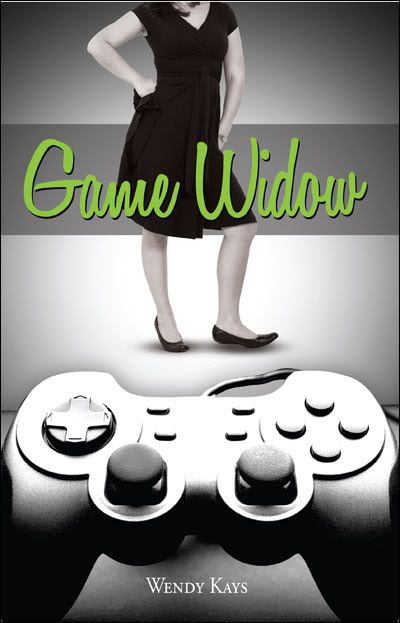
Game Widow

Game WidowGame Widow by Wendy Kays (Synergy Books, 2008, ISBN 978-1-934454-26-8)
Bonus material available.

This book was written by: Wendy Kays, who “has been married to the lead designer of the SOCOM: U.S. Navy Seals video game series for six years.” Ms. Kays is also a former game widow, but she and her husband have revitalized their once-endangered marriage into a union so strong that his accomplishments are listed first under her biography.

What is in this book: An analysis of the reasons why video games entice so many people to abandon their families, along with a look at the industry that creates them and ways to take back some of the control that they exert over our lives. This is a serious subject because “sending an adult online should have similar expectations that sending an adult to Las Vegas would,” which means that there is a real possibility that some people “will get into trouble of the mild kind, usually, and on occasion, the serious, life-altering or life-ending kind”(p.108).
In the real world, “there’s no road map with big goals broken into smaller goals that have guaranteed rewards for success”(p.8), while the virtual world can be quite rewarding, as Ms. Kays illustrates with Navarre--a fictional online persona created to demonstrate her point. “The Rare Hummingbird of Flashiness that hovers around Navarre is not only pretty and attention-grabbing, it’s [sic] presence also advertises that Navarre is one of only a few players ever to defeat the Elusive Swamp Witch, who only appears in the game once a year”(p.8). Even games designed to mimic reality are streamlined and more pleasant. “You may have to pick up dog poop in the real world, but you don’t have to clean up after your virtual pet. Or if you do, you’re insulated from experiencing the unpleasantness of bending over, fooling with the bag, inhaling the smell, and feeling the warm lump”(p.11).

What is not in this book: A chicken-livered lack of resolve. When their marriage was in trouble, Ms. Kays and her husband “felt a professional was too scary and formal, so we did what we could on our own”(p.79), which meant doing things the hard way. Ms. Kays writes that “I forced myself to listen,” but more importantly she let him talk and “continued to listen (which was extremely difficult, because I wanted to talk about me so badly)”(p.79). Despite the difficulties, Ms. Kays refused to give up. “I even had to swallow my pride and let him take the lead sometimes so he could know this was a joint effort he was part of and not just me acting like a dictator making all the new rules”(p.81).
But she had to go beyond swallowing her pride. “I made a personal rule that I couldn’t talk about him as the problem, just the problem itself. I pretended our problems had magically appeared out of thin air – with no one to blame”(p.80). It got worse for her, because “If he said I was the problem, I had to suck it up and apologize, even if I didn’t feel like I was the problem”(p.80), but it was necessary because anything else would make him think “a ‘fixing things’ talk was really a ‘wife getting time to yell at him’ trick”(p.80).
Game Widow recounts a moving story of intense personal struggle, and Ms. Kays herself writes that “humble pie was expensive emotionally, but I was willing to give up my righteous anger to get my happy life with my husband back”(p.81). It ultimately paid off because not only is their marriage restored, but “in the time my husband used to play video games at night, he is earning an MBA from a prestigious university”(p.115).

Would you recommend this book to widows of U.S. servicemen who were killed in Iraq or Afghanistan? Without reservation. Ms. Kays’ description of a game widow as “a woman whose husband might as well be dead to her because he is constantly engaged with video games”(p.xii) is as respectful to their situation as it is similar. The fact that Ms. Kays’ not-dead husband has earned a living by sensationalizing the ongoing sacrifices made by the United States Armed Forces and marketing it as entertainment can only add another layer of empathy and understanding.

Would you recommend this book to literary agents like Jeanne Fredericks or Robert E. Shepard? Yes, but not just so they can cry bitter tears into their pillows over not signing this author while they had a chance.
It turns out that “the video game industry is not like the book industry in which near-finished manuscripts submitted by eager authors can be reviewed and the best one chosen”(p.41). That means that these agents may find that their unconventional willingness to consider book proposals without reviewing near-finished manuscripts is an attitude better suited for a different field. Someone should also tell Hart Publishing that they can cut their instructions on submitting manuscripts that are not yet written and just wait for the near-finished ones to come rolling in.
Changing trades from publishing books to publishing video games would require some serious adjustments, though. With electronic entertainment, “even if the idea comes from someone who has already designed a best-selling video game, there is no guarantee on how the final product will turn out,”(p.41) which is completely unlike the publishing industry, where bestselling authors can always be relied upon to deliver stellar work.

What was interesting about this book? Ms. Kays’ startlingly plausible extrapolation of future trends based on current evidence. Gaming will cause problems in the workplace because “employers are already considering passing more of the cost of health care on to employees who are overweight or who are smokers. When and if playing video games is shown to make health conditions worse, or even cause them, gamers will be targeted as well”(p.61). In fact, “It’s only a matter of time before organized research into the health effects of video gaming is done and before the debate over who covers the costs of the health consequences of gaming begins,” and in the future “it may become as acceptable to discriminate against gamers as it is to discriminate against smokers and people who are overweight”(p.61).
However, there is still hope. After all, “if society can embrace recycling and alternate energy to impact the environment, sacrifice buying frills to save money for retirement, and avoid buying products from companies known to employ inhumane sweatshops, we can certainly sacrifice some time to carefully choose and manage our entertainment,” which will be how we can “turn the vast tide of a selfish and entitled society and an entrenched game industry”(p.116).

Digg this Stumble Upon Toolbar

March 1, 2009

You're Not Speaking My Language

Genderspeak: Men, Women, and the Gentle Art of Verbal Self-Defense by Suzette Haden Elgin PhD (John Wiley & Sons, 1993, ISBN: 0-471-58016-3)

This book was written by: Suzette Haden Elgin, PhD, an expert in applied psycholinguistics and the founder of the Ozark Center for Language Studies. Dr. Elgin has also written several science fiction books, including the Native Tongue series--in which she developed a new language, Láadan, similar to Klingon but less popular.

What is in this book: A way of looking at the way men and women use language differently. These differences are subtle and vary from person to person, but “men are usually bigger and stronger, which means they can often drown other people out; women are more likely to start crying, a different kind of power play that nevertheless brings conversation to a halt”(p.166). Dr. Elgin wants to help people move from masculine or feminine extremes to realize that “Male/female communication does not have to be either armed combat or endless mystifying tedium”(p.xvi).
Dr. Elgin explores nuances and pitfalls of intergender communication with clear explanations, like her declaration that “a man asked to talk openly and easily and in detail about his feelings is like a woman asked to talk openly and easily and in detail about her urination”(p.258). Both are perverted deviants, but there aren’t nearly as many websites where you can pay to hear men talk about their feelings.

What is not in this book: Pacifism. Verbal self-defense may be gentle, but Dr. Elgin is realistic about the violence of the realm in which it must be practiced, noting that “differences in semantics can be as dangerous as missiles, and are often as well hidden”(p.40). This self-defense is an important art to master because “hostile language can kill you as surely as hostile driving can”(p.165). Not only does hostile language pose a health risk, but if you don’t get out there and make friends, you’re in mortal danger. That’s because “research has proved that people who are disliked and lonely have far more health problems than people with a strong social network”(p.167).

Would you recommend this book to Don Roberts? Yes, because “using the Gentle Art techniques will bring you extra benefits—fringe benefits—that are valuable to you on the basis of pure self-interest alone”(p.97), which may inspire him to write "Fringies 2: The Fringe-ening."

Would you recommend this book to Richard Gere? No, he’s done pretty well for himself through his mastery of gerbil self-defense.

What was interesting about this book? Dr. Elgin’s discussion of sexual harassment. “One man will say ‘That’s a pretty dress’ so suggestively that every word in the sentence might as well be one of the classic ‘four-letter’ ones; another can say ‘Nice tits’ as inoffensively as if he had said ‘Yankee Doodle.’”(p.211)
I want Dr. Elgin to teach me how to whistle “Yankee Doodle.”

Special Award
Bitterly Books would like to give the I Just Pantsed Arthur Miller While He Was Giving Eugene O’Neill A Wedgie Award for Excellence in Dramatic Accomplishment to Dr. Elgin for the realistic scenarios, written out in narrative form, that open each chapter of her book. She may have intended Genderspeak to be a nonfiction work that explores intergender differences through the scientifically rigorous discipline of linguistics, but these dramatic, realistic scenarios play out in such a gripping fashion that they almost eclipse the book's analysis of social interactions. Readers follow the trials and tribulations of Mary, who struggles to be understood by her parents, her coworkers, and her boss. Mary also has problems with her husband Frank because it “seems to Frank that even when, as in this case, Mary can see that he’s busy, she doesn’t hesitate to interrupt him and demand that he involve himself in what he sees as her soap opera. He resents this, and does everything he can to discourage it”(p.230). The mindset of John, her boss, isn’t very helpful, either:

“As John perceives the situation, he has no choice but to put up with women in the workplace–the laws require him to do that—but he’s under no obligation to make it easy for them. [....] The sooner he can maneuver her into giving up the idea of a business career, the sooner she’ll be out of all this stress and tension.
He is of course careful at all times to maintain the surface position of a nonsexist male. That’s part of doing business in America today, and he recognizes and responds to that fact in spite of his own more conservative views on the subject. He enjoys the strategic challenge this offers him, and prides himself on his skill in dealing with it.”(p.3)

Dr. Elgin, please enjoy your I Just Pantsed Arthur Miller While He Was Giving Eugene O’Neill A Wedgie Award for Excellence in Dramatic Accomplishment, because you (and your complex, nuanced characters) have worked hard for it.

Digg this Stumble Upon Toolbar

December 1, 2008

Being Prepared: What Boy Scouts Wish They Knew

Preparing for Adolescence by Dr. James Dobson (Bantam Books, 1980, ISBN 0-553-24231-8)

This book was written by: Dr. James Dobson, chairman of the board of the nonprofit Focus on the Family organization and author of Dare to Discipline, which advocates corporal punishment for raising balanced, well-adjusted children. This book helps guide boys and girls through the challenges they will face at adolescence, after you have beaten them into responsible, well-adjusted children.

What is in this book: Advice from a hip cat who wants “to participate in a rap session”(p.109) with adolescents to let them know that they’re not alone in their troubles. Dr. Dobson establishes his street cred quickly, letting you know that if you use this book to help your children through their adolescence, "Knute Rockne would be proud of you!"(p.4), and showing how you and he feel the same pressures to conform to society's ideas of what it means to be current, like their suggestion that “nobody uses hair oil anymore, and if you use it as you did in the fifties and sixties, there must be something wrong with you”(p.36).
Dr. Dobson then uses his uncanny insights into the pressures faced by modern adolescents to sketch an accurate representation of their first encounter with drugs and peer pressure. It starts “in a car with four other young people,” where everyone starts taking “reds,” and “you are the last one to be handed the bottle”(p.37). If you give in to the taunting of your friends (“Come on, sissy [....] Who would have thought that Jackie-Boy was a big chicken! Come on, Baby Face”[p.37]), then “you’ll find that the next time drugs are offered, it’ll be a little easier to take them [.... and] soon you’ll be seriously hooked on narcotics, all because of the pressure of conformity”(p.38).
“Other harmful behaviors can also be traced to the pressure of conformity,” and Dr. Dobson traces these behaviors back to their source, usually beginning “by a ‘friend’ offering a weed to someone who has never smoked”(p.39). This book will give you the courage to stand up to any “friend” who tries to offer you a weed.

What is not in this book: Advice for children who are not normal, where normal is defined as heterosexual, Jesus-worshipping, and coming from a household with married parents and a stay-at-home mom. Worried that you can’t live up to this ideal? Don’t be. “Homosexuality is an abnormal desire that reflects deep problems, but it doesn’t happen very often, and it’s not likely to happen to you”(p.66).
Dr. Dobson also refuses to be hoodwinked by the mainstream media’s alternate explanations for drug and alcohol abuse. Kids are “tempted to take drugs or smoke or drink for the same reason you are—simply because they’re afraid to be different”(p.39), and anyone who tries to tell you that substance abuse can be caused by other factors like surviving sexual abuse, coping with parents getting divorced, having parents who beat them, dealing with being a closeted homosexual, and undiagnosed mental illnesses like chronic depression, schizophrenia, or bipolar disorder has clearly never been an adolescent.

Would you recommend this book to Jamie Lynn Spears? Maybe back when she was a Nick star, but these days, she’s a woman.

Would you recommend this book to John McCain? No, he should read "Preparing for Obsolescence." ZING!

What was interesting about this book: You will want to keep a bucket of ice water handy or be ready to take a cold shower when you encounter the steamy language he uses to start discussing “The Sex Appetite”(p.58) and how “you will be with a person of the opposite sex who will let you know that he or she will permit you to have this experience”(p.61). While colorful, this language is necessary and completely justified because “your body will begin to develop a brand new appetite when you’re between twelve and fifteen years old”(p.58). Adolescents will find that “every year as you get older, this appetite will become more and more a part of you,” and in the same way that missing breakfast will make you “plenty hungry by two o’clock in the afternoon,” this sex appetite will build within you until “this desire may lead you to marriage”(p.58).
Dr. Dobson also describes what it’s like to have a crush, which “occurs when you begin to think that one particular person is absolutely fantastic, and you fantasize about the possibility of being married to that person”(p.59), and explains that “I deal with so many Christian young people who are torn apart with guilt over masturbation; they want to stop and just can’t”(p.64).
Unfortunately, Dr. Dobson stops short in his discussions of the sex appetite by neglecting to mention issues such as sex anorexia, sex bulimia, and the dangers of death by sex starvation.

Digg this Stumble Upon Toolbar

October 1, 2008

Surviving Families

Families and How to Survive Them by Robin Skynner and John Cleese (Oxford University Press, 1984, ISBN: 0-19-520466-2)

This book was written by: Psychiatrist Robin Skynner and one of his former patients, John Cleese. They collaborated on the book because most people have “neither the need, the time nor the inclination to bother with therapy itself,”(p.10) but Cleese notes that “even if these ideas are only one-hundredth as intriguing to you as they were to me, I shall still get the royalties”(p.11).

What is in this book: A transcription of the two authors (Skynner and Cleese) discussing behavioral and relationship difficulties experienced by families. The “script” format was the clear choice because the best medium for exploring the delicate nuances present in the full range of human emotion is obviously a 285-page dialogue between two Englishmen.
The authors assert that most family issues stem from the fact that people seek out partners who have similar personalities developed through similar upbringings. “We signal, by our expressions, postures, and ways of moving, certain habitual emotional attitudes we have, which we share with other members of our family. And people from similar families will pick them up and respond to them”(p.22), which will cause problems because “All those people who used to get married – and still do – to escape from their families are in some way taking their families with them, psychologically speaking”(p.16). You may not marry your mother, but you will seek out and marry the sister you never had.
After establishing this premise, they continue on to discuss relationships between family members on every level, breaking down problems and their solutions by using helpful metaphors--such as their explanation of sexual dysfunction as a situation where “the man is like the driver of a car who has taken his hands off the steering wheel and climbed into the back seat – the car being his penis and the steering wheel being his connection with it”(p.289).

What is not in this book: The dead parrot sketch. A heartfelt plea not to beat your children. Cleese writes that when his daughter “was about four, she was getting very, very difficult and I finally lost my temper and I smacked her hard for the first time. And to my absolute amazement I could sense that our relationship immediately got better. I had to smack her again sometimes, but the intervals between the smackings were getting longer and longer. So that after she was six, I hardly ever had to do it”(p.184).

Would you recommend this book to Andrew Dice Clay? Probably not. The subject matter would be unlikely to interest him, and he may take issue with Cleese’s claim that “I have heard several hundred thousand dirty jokes in my life, and only seven of them were funny”(p.236).

Would you recommend this book to that guy who won't stop quoting Monty Python lines (especially the ones from the Knights of Ni)? No. While that guy could definitely benefit from some quality time with a psychiatrist and/or psychotherapist, having him read this book would be like giving an antacid to someone with the Ebola virus.

What was interesting about this book: While Robin Skynner (1922–2000) went on to become physician in charge of the Department of Psychiatry at Queen Elizabeth Hospital for Children as well as founder and first chairman of the Institute of Family Therapy before his death, his co-author has found employment as a motivational speaker who notes that the transitional object bringing comfort and support to his infancy “was a stuffed rabbit called Reggie”(p.143).

Digg this Stumble Upon Toolbar

September 1, 2008

Stop Being Narrow-Minded About Pregnancy

Big, Beautiful, & Pregnant: Expert Advice and Comforting Wisdom for the Expecting Plus-Size Woman by Cornelia van der Ziel, MD, and Jacqueline Tourville (Malone & Company, 2006, ISBN: 1-56924-319-0)

This book was written by: Cornelia van der Ziel, an obstetrician specializing in plus-sized and high-risk pregnancy, and Jacqueline Tourvile, who "became pregnant just as her weight reached an all-time high"(p.3).

What is in this book: Solidarity, helping plus-size women to stand together and confront the tyranny of the massless. The authors "interviewed numerous plus-sized women"(p.4) and "throughout this book, you will hear from members of this big, beautiful, and pregnant sisterhood"(p.5) "The sisters are here to share a few stories and tips of their own"(p.8). For example, REBECCA, Age 29, shares the pain she felt "ordering what I always did after a bad day at work—two cheeseburgers, two large French fries, and—ironically—two small diet sodas. I ordered two of everything so it looked like I was just picking up dinner to eat at home with my husband. [....] I was not eating out of extreme hunger. I ate this way to feel numb"(p.118). This book is designed to help women "call on the sisterhood,," the "plus-sized women who blazed the pregnancy trail before you”(p.181).

What is not in this book: Denial. It’s a fact that plus-size women encounter societal and physical difficulties during their pregnancy. "It may seem a trivial issue, but small things like being given a hospital gown that obviously doesn’t fit and then feeling obligated to wear it really does matter to your overall birthing experience(p.196). This book encourages you to be honest with yourself and "Congratulate yourself on doing a great job being pregnant"(p.19). One sister celebrated her pregnant body by making a plaster belly cast and writes that "two years later, my belly cast still hangs prominently on our living room wall"(p.183). The book also notes that while plus-size women may spend more time in labor, "when looked at individually, of course, plus-size experiences vary widely"(p.197). Hee hee. Widely.

Would you recommend this book to Arnold Schwarzenegger? You realize that Junior was only a movie, right? He wasn’t actually pregnant.

Would you recommend this book to Kate Moss? Not unless she has some exceptionally fat ovaries that we don’t know about.

What was interesting about this book: "Belly painting is another fun, creative way to celebrate your pregnant body. With your belly as the canvas, let your partner, friends, or your other children transform your belly into anything from a smiling jack-o’-lantern to a multicolored Easter egg, fish tank, or snow globe"(p.185). Alternatively, one could paint a giant eyeball, the death star, or a tribute to the chestburster from Ridley Scott’s life-affirming story of transition and birth, Alien.

Digg this Stumble Upon Toolbar

Read more reviews...